

 English
 русский
 عربى
20/10/2026 Industry
Powering a Container Pop Up Shop With Integrated Containerized Solar Systems
Content
A 20 ft container pop up shop usually draws somewhere between 2 and 12 kWh a day. The number depends on whether you are running air conditioning and a merchandising fridge or just LED lighting and a point-of-sale terminal. Almost none of the locations that suit this format, whether that is a festival field, a vacant lot, a construction site canteen or a mall car park, come with a usable grid connection. The power supply is not an accessory to the build. It decides which sites you can take, how many days a week you can trade, and whether you can trade into the evening at all.
The conclusion first: for most container pop up shop projects, an Integrated Containerized Solar Power Generation System is a better default than a diesel generator. It removes the daily fuel run, keeps the trading floor quiet, and rolls to the next site when the lease ends. What follows is the reasoning behind that recommendation, the load numbers that support it, the cases where a hybrid PV-BESS-DG container still earns its place, and the details worth settling before you place an order.
What a Container Pop Up Shop Actually Draws
Retail loads are small but stubborn. They are also unevenly distributed through the day. A coffee counter pulls hard between 07:00 and 10:00. Air conditioning peaks between 13:00 and 16:00 in summer. Lighting and a signage display dominate after sunset, when the PV array is producing nothing at all. Sizing on connected load alone is the single most common mistake, because a shop with 9 kW of connected equipment may only ever run 4 kW of it at once, while a shop with 5 kW of nameplate load can consume 30 kWh in a long summer day.
Connected load tells you the size of the inverter and the distribution board. Daily energy, plus how much of it falls after dark, tells you the size of the battery. The two are not interchangeable, and a supplier who quotes one without asking about the other has not finished the job.
| Shop configuration | Typical peak load | Daily consumption | Supply approach |
|---|---|---|---|
| Apparel or merchandise only: LED lighting, POS terminal, laptop, phone charging bar | 1 to 2 kW | 2 to 4 kWh | Small PV-ESS container with 5 to 10 kWh of storage |
| Retail plus merchandising fridge and about 6 hours of air conditioning | 4 to 5 kW | 9 to 13 kWh | Modular or scalable PV-ESS container with 15 to 25 kWh of storage |
| Retail plus 10 hours of air conditioning, coffee equipment and event lighting | 8 to 12 kW | 25 to 40 kWh | Hybrid PV-BESS-DG all-in-one container |
| Container unit used as a booking or control point on a remote site | 2 to 3 kW | 5 to 8 kWh | Scalable PV-ESS container sized for two days of autonomy |
Why Containerized Solar Suits Pop-Up Retail Better Than a Generator
Diesel is the reflex answer, and on a two-day activation it can work. On a site that trades for six weeks, the arithmetic changes quickly.
- Fuel logistics. A 6 kW diesel set under part load burns roughly 1.5 to 2 litres per hour. A ten-hour trading day is 15 to 20 litres, which somebody has to collect, store, and account for, every single day.
- Noise. A small generator runs at about 65 to 75 dB(A) at seven metres. That is audible over conversation and often written into mall forecourt agreements and event noise conditions.
- Emissions and permits. Urban sites and city-centre events increasingly restrict generator running, and a container unit placed under an awning or inside a courtyard has nowhere to send exhaust.
- Reuse. A solar power container is an asset that redeploys to the next activation. Fuel spending disappears with the last event.
- Fuel security. A full jerrycan on an unattended site at night is a liability few operators want to manage.
The counterargument is honest and worth stating: solar alone struggles through several consecutive overcast days in winter, particularly at higher latitudes where December output can fall to 40 or 50 percent of June. That is precisely why turnkey hybrid arrangements exist, and why an experienced mobile solar container manufacturer will ask about the worst month rather than the best one. Background on how these packaged energy arrangements are being deployed commercially is covered in this overview of containerized solar turnkey energy solutions.
Sizing an Integrated Containerized Solar Power Generation System
The sizing sequence is short, but skipping any step shows up later as a shop that closes early or a battery bank that ages faster than the warranty suggests.
- Measure, do not estimate. Clamp-meter the real loads across a full trading day. Nameplate figures on fridges and air conditioners are worst-case ratings, not average draw.
- Convert to daily kWh. Multiply each load by its actual runtime, then add everything together.
- Add autonomy. One day of storage is the minimum for a site with grid backup. Two days is sensible for a field site where a supply interruption means closing.
- Derate the array for season and latitude. A 3 kWp array that covers July comfortably may cover only half of the December demand.
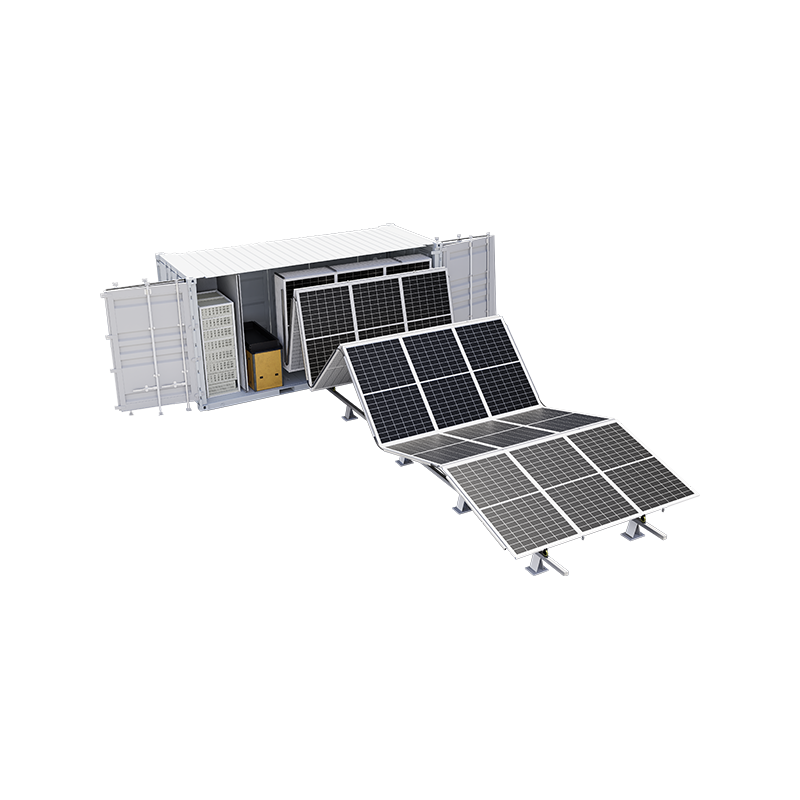
- Check the roof. A 20 ft container offers roughly 13 to 14 square metres of usable roof, which fits about 3 kWp of flat-mounted modules. A 40 ft unit roughly doubles that. If the winter requirement exceeds the roof, the answer is a hybrid, not a bigger battery.
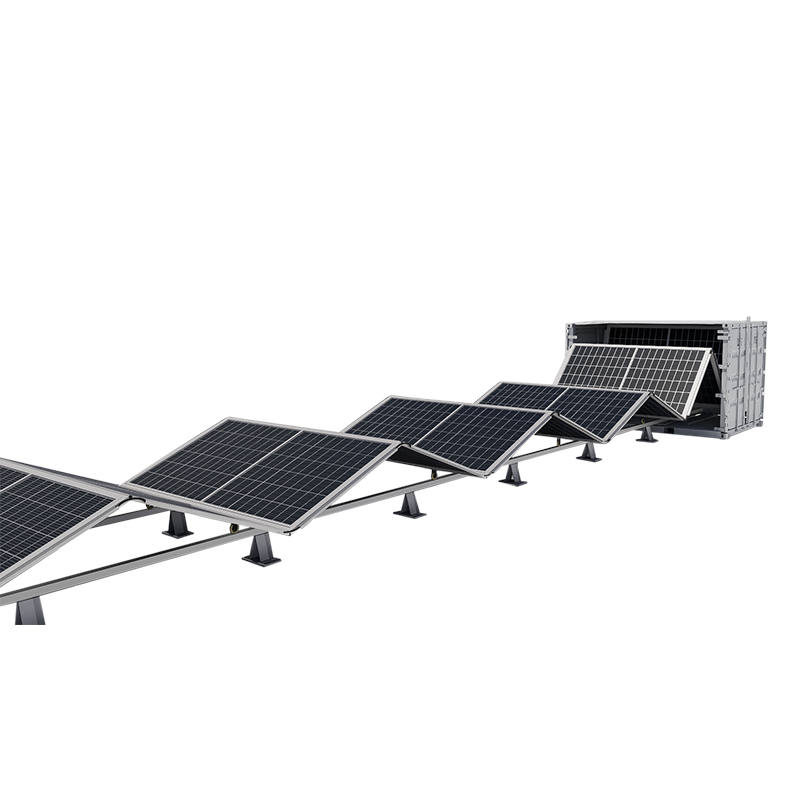
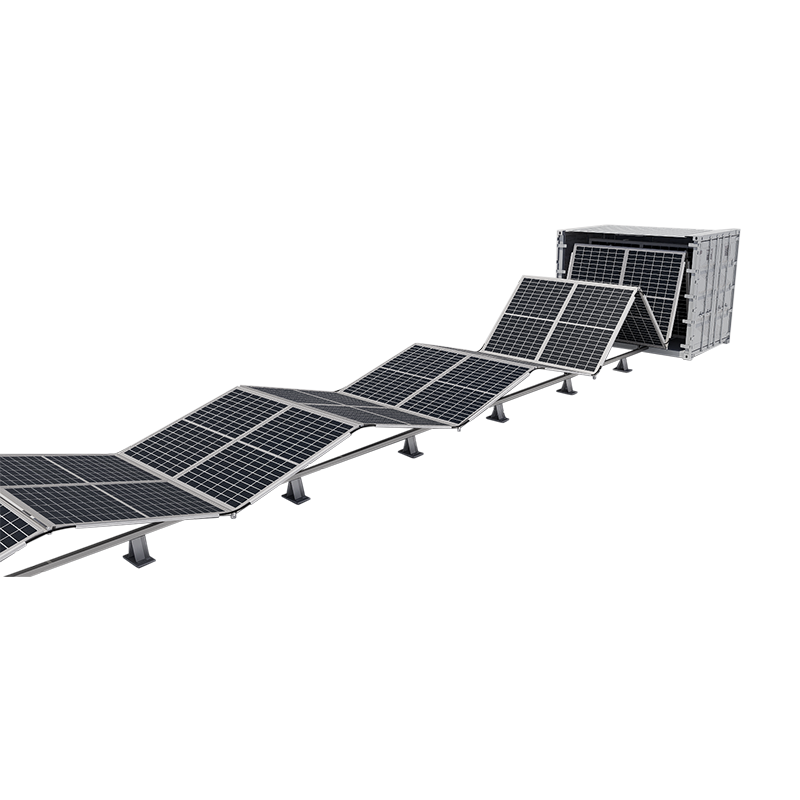
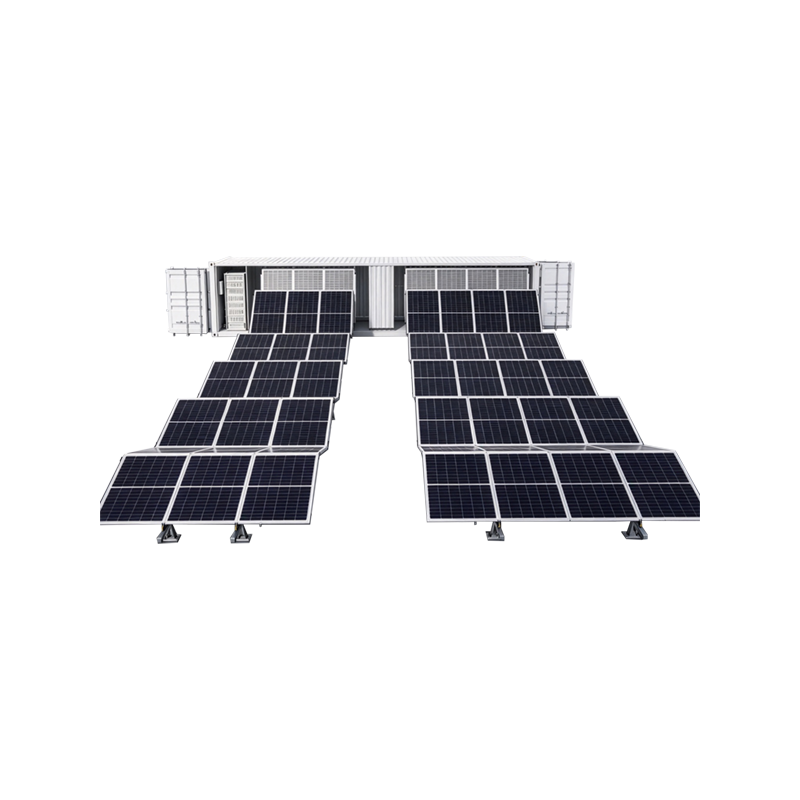
Configuration then follows the numbers. Ampora Technology's Integrated Containerized Solar Power Generation System line includes environmental-friendly, hybrid full installation, modular, customized, convenient and scalable variants, which means a retail activation can be matched to a defined load profile rather than forced into a single standard box.
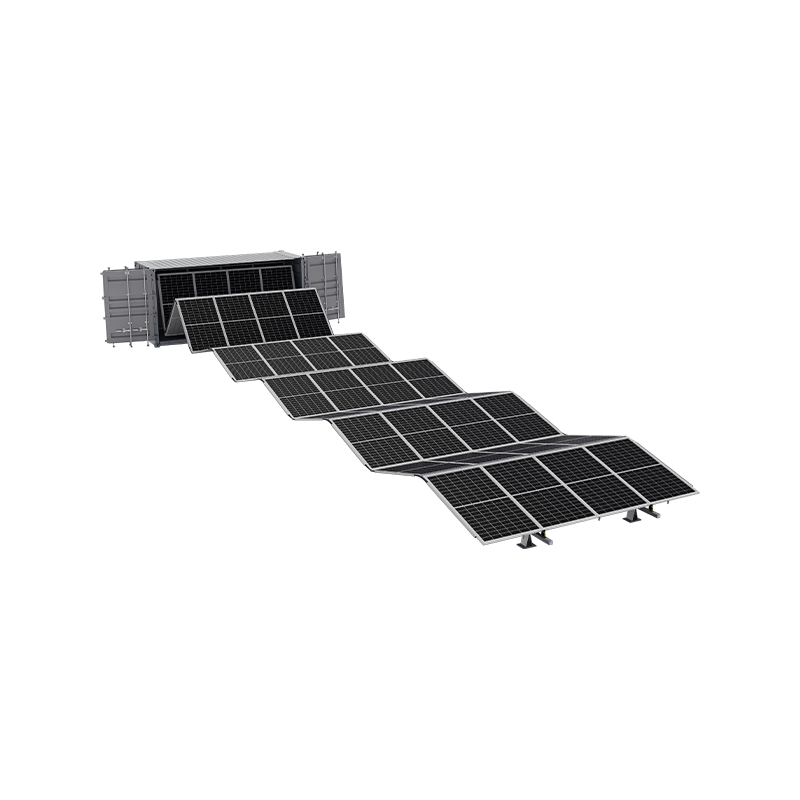 Ampora Integrated Containerized Solar Power Generation SystemReview modular, hybrid, all-in-one and scalable PV, battery and generator configurations for matching a defined load profile.View Product →
Matching the Container Variant to the Shop
A merchandise-only unit with a two-day event cycle rarely needs more than a compact PV-ESS container. A shop that adds a fridge, a second trading window or a seasonal extension of the floor plan needs storage that grows with the load rather than a fixed bank that runs out of headroom in year two. For that pattern, a scalable platform avoids replacing the whole asset when the concept changes.
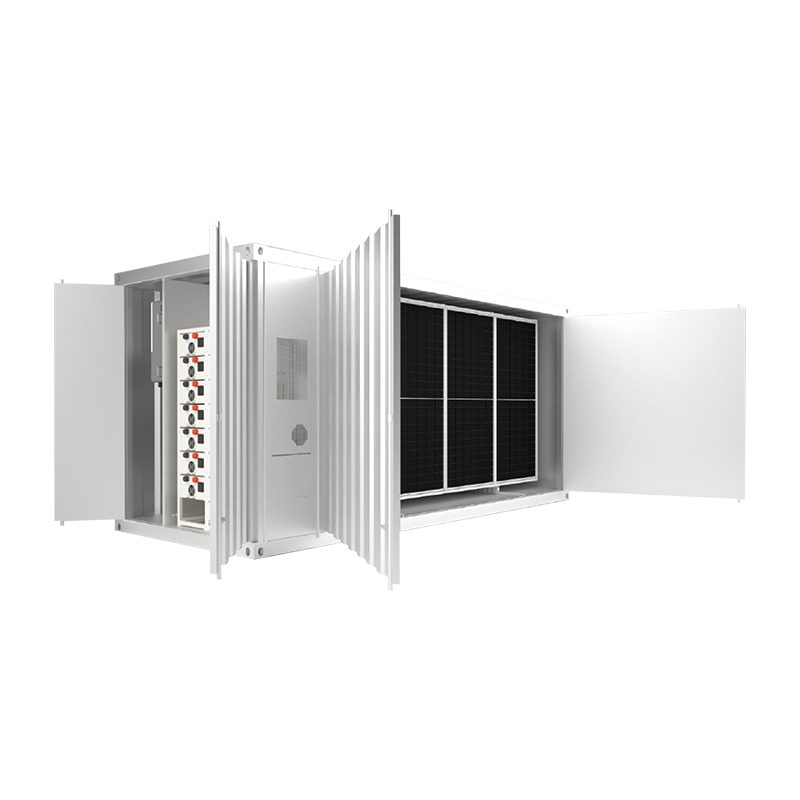 Portable and Scalable PV & ESS Container MP20HQ-110KW/241KWHA pre-wired 20HQ microgrid with 110kWp solar and 241kWh storage, suited to growing loads and optional backup generator continuity.View Product →
Where the site trades through winter, or where the activation depends on a coffee machine and a ten-hour air-conditioning duty cycle, combining photovoltaic generation, battery storage and a backup generator set inside one container gives continuity that neither source delivers on its own. The generator runs rarely, at high load, for short periods, which is also the operating pattern that keeps its maintenance interval long.
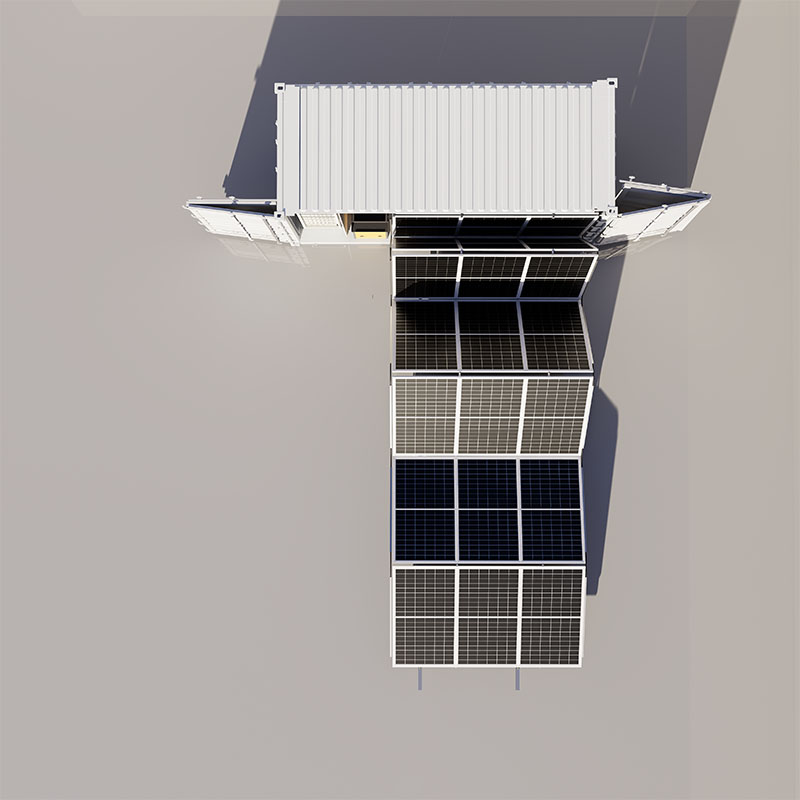 MP20HQ-78KW/128KWH Integrated Solar, Battery and Diesel Generator SystemA 20HQ container combining 78kWp PV, 128kWh storage and a 75kVA diesel generator for continuous off-grid or weak-grid power.View Product →
Site Conditions, Permits and Installation Practicalities
The container itself is usually the simple part. The surrounding site work is where projects slip.
Ground and Structure
A battery-heavy power container can weigh several tonnes, and that mass lands on four corner castings rather than being spread across the floor. Paved or properly compacted ground is normally required, and the unit has to sit level. Roof-mounted or racked PV arrays add wind load, so anchoring or ballast needs to be designed for the local wind region rather than copied from a previous site. A container with an elevated array behaves like a sail.
Electrical Design
Earthing of the container body, the PV frames and the AC distribution must be treated as one system. DC and AC circuits should be separated, with residual current protection on the AC side and surge protection on both. If the power container sits apart from the retail container to preserve selling space, keep the cable run short or upsize the conductors; voltage drop on a long low-voltage DC run is a quiet efficiency tax that shows up as reduced usable capacity.
Thermal Behaviour
An unshaded steel container in direct summer sun can sit well above ambient inside. That affects both usable battery capacity and long-term cell ageing, so ventilation, shading or a small extraction fan is worth planning from the start rather than retrofitting. At the other end of the range, most lithium chemistries should not be charged below freezing, and a cold-climate winter site needs either thermal management or a charge-disable set point that protects the bank until the internal temperature rises.
Permits and Access
Temporary retail units typically need fire egress that a standard container door does not provide on its own, an accessible ramp if the public enters, and confirmation that temporary planning consent covers the trading period. Event sites usually require documentation of electrical inspection before the power is energised. These items are not exotic, but they take longer to arrange than the container does to deliver.
Operating Cost and the Numbers Worth Questioning
Diesel has a low capital cost and a high marginal cost. A solar power container inverts that. Over one short activation, the generator often wins on cash. Over a season of repeated deployments, or across several years of the same asset being dragged between sites, the solar container closes the gap and then keeps going, because the daily fuel line item is close to zero and the transport, crane and commissioning costs are shared across every event rather than paid again each time.
Three figures deserve scrutiny in any quotation. First, daily kWh rather than peak kW, because peak ratings flatter a system that cannot carry the shop through an evening. Second, autonomy in days, stated explicitly with the weather assumption behind it. Third, battery cycle life at a stated depth of discharge. A shop trading 200 days a year will put 200 cycles on the bank, so a chemistry rated for several thousand cycles at 80 percent depth of discharge has years of useful service ahead of it, while an undersized or over-cycled bank will not.
The practical takeaway is straightforward. Work out the daily energy first, decide how many days of independence the site needs, then choose the container configuration that matches. Everything else, from panel count to inverter rating, follows from those two numbers.
A container pop up shop succeeds or fails on whether it can open on time, every day, in the location that makes commercial sense. Power is the constraint that decides both. Treating the supply as an Integrated Containerized Solar Power Generation System rather than an afterthought turns a temporary retail unit into a repeatable, relocatable asset, one that can be dropped onto a site with no grid connection, run quietly through a full trading day, and loaded onto a truck for the next one.
You May Also Like
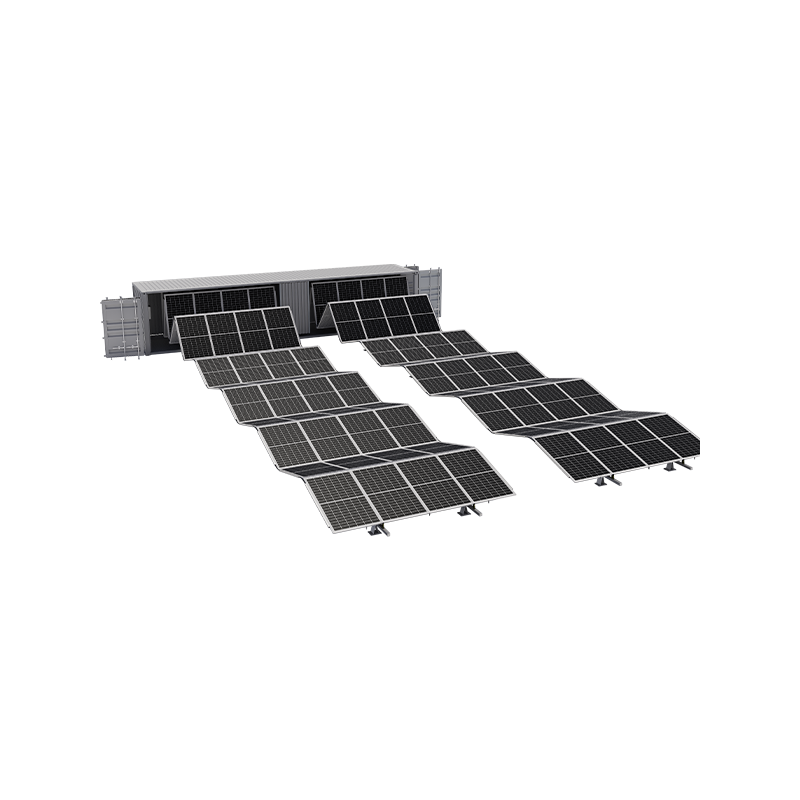
Copyright © Ampora Technology Co., Ltd. All Rights Reserved.
Mobile Solar Container Manufacturers Solar Power Container Solution