

 English
 русский
 عربى
12/10/2026 Industry
Container Energy Storage System Guide: Sizing Off-Grid Power Correctly
Content
- 1 What Is Actually Inside a Container Energy Storage System
- 2 Sizing: Usable Capacity, C-Rate and Auxiliary Load
- 3 Container, Prefabricated Cabin or Open Skid
- 4 Off-Grid Architectures: Solar Alone or Solar Plus a Generator
- 5 Scaling and Relocation
- 6 What to Write Into the Specification
- 7 Where Containers Beat Fixed Plants
Consider a site with a 90 kW drill rig, a 40 kW camp load and a night shift that runs twelve hours. Add the distance to the nearest transformer, and the arithmetic quickly turns a generator-only plan into a purchase order for a container energy storage system. At that point the decision stops being about batteries and becomes about three numbers on the datasheet: usable capacity, continuous power, and how much of the first two the cooling system consumes on its own.
The conclusion first: select the container by working backwards from the load profile and the reliability target, not from the battery nameplate. Enclosure type, cooling method and whether a diesel generator shares the same frame all follow from that single decision. What follows is how the hardware fits together, where projects most often misjudge it, and what to write into a specification before signing anything.
What Is Actually Inside a Container Energy Storage System
A container energy storage system is a self-contained power block built into a standard 10-, 20- or 40-foot frame. The battery is only one layer of it. A typical unit contains:
- Battery racks, most commonly lithium iron phosphate (LFP) cells, with module-level and rack-level management.
- One or more power conversion systems (PCS) that invert DC to AC and back, usually rated 97 to 98.5 percent efficient.
- A transformer and switchgear when the site distributes at medium voltage.
- Thermal management: air conditioning in moderate climates, liquid cooling where ambient temperatures stay high or cells cycle hard.
- Fire detection and suppression, plus gas and smoke sensors.
- An energy management system (EMS) handling dispatch, protection interlocks and remote monitoring.
The enclosure is the least glamorous part and the one that decides service life. Salt spray, dust ingress and internal condensation shorten a system's working life, so the IP rating and the corrosion class, C4 or C5-M for coastal and desert sites, belong in the specification next to the cell chemistry.
Sizing: Usable Capacity, C-Rate and Auxiliary Load
Nameplate capacity sells containers; usable capacity runs them. Three reductions apply before a single kilowatt-hour reaches the load.
- Depth of discharge. LFP systems are normally cycled between 80 and 95 percent of nominal capacity depending on warranty terms, so a 250 kWh pack may deliver roughly 225 kWh.
- Round-trip efficiency. Count 88 to 92 percent for an AC-coupled container once conversion and transformer losses are included.
- Auxiliary consumption. Cooling, controls and trace heating draw 3 to 8 percent of stored energy per day in hot climates, and considerably more in cold ones where heaters run overnight.
A 250 kWh container feeding a 40 kW continuous load therefore looks like five to six hours of runtime, not the six-and-a-quarter that simple division suggests. Apply a 10 to 15 percent derating for ageing over ten years and the honest figure is closer to four and a half hours.
Power matters as much as energy. Most containerised systems are configured for a 0.5C to 1C discharge, so a 250 kWh unit usually sustains 125 to 250 kW. Mismatching inverter and battery produces the same symptom either way: a system that trips on overload, or one that never reaches rated output before the state of charge collapses.
Container, Prefabricated Cabin or Open Skid
All three hold batteries; they differ in how much work the site has to absorb. A container travels on standard logistics and can be repositioned later. A prefabricated cabin is built closer to a fixed plant, with more freedom in layout and insulation but heavier civil work. An open skid suits mild, dry, well-fenced sites where the lowest cost per kilowatt-hour outweighs weather protection.
| Factor | Shipping container | Prefabricated cabin | Open skid |
|---|---|---|---|
| Transport | Standard flatbed or vessel; certified frame | Oversize loads and permits common | Flatbed, components exposed |
| Site work | Concrete pad and cable trench | Foundations plus on-site assembly | Pad only, plus fencing |
| Weather protection | Good, extra insulation advised in extreme climates | Best, designed in | Poor without a separate shelter |
| Relocation | High: lift, truck, reconnect | Low to medium | Medium, wiring is fragile |
| Typical fit | Off-grid sites, rental fleets, staged projects | Utility-scale permanent installations | Temporary, dry, guarded sites |
Off-Grid Architectures: Solar Alone or Solar Plus a Generator
A solar-plus-storage container is the cleanest answer when the load is modest and predictable, but it forces the array to be sized for the worst month. A site drawing 300 kWh a day in summer may need twice the panel count to cover a cloudy December, and the surplus then sits idle for the rest of the year.
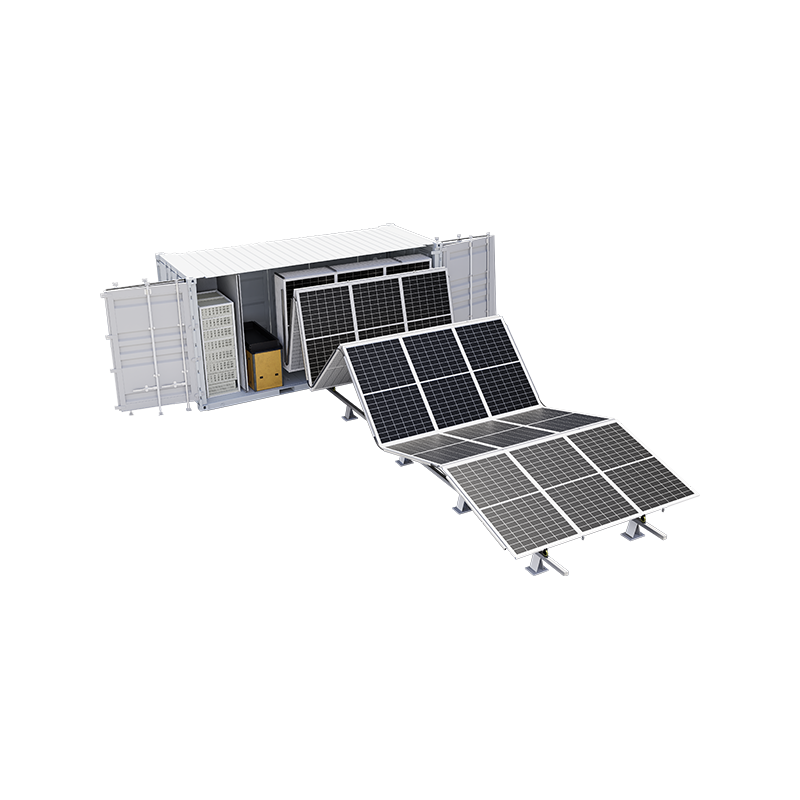
Where the load must not drop, the practical arrangement adds a generator as a third leg: solar carries the daytime load and recharges, the battery covers the night and smooths transients, and the generator starts only when state of charge falls below a set threshold. Generator sizing follows peak load with a 1.25 multiplier, and it should be loaded hard while running, because a unit idling at 20 percent load burns fuel and fouls its own exhaust. Keeping all three sources in one frame removes the cabling and protection coordination that separate units demand. A good example of this approach is this PV, battery and diesel all-in-one container built for continuous off-grid duty.
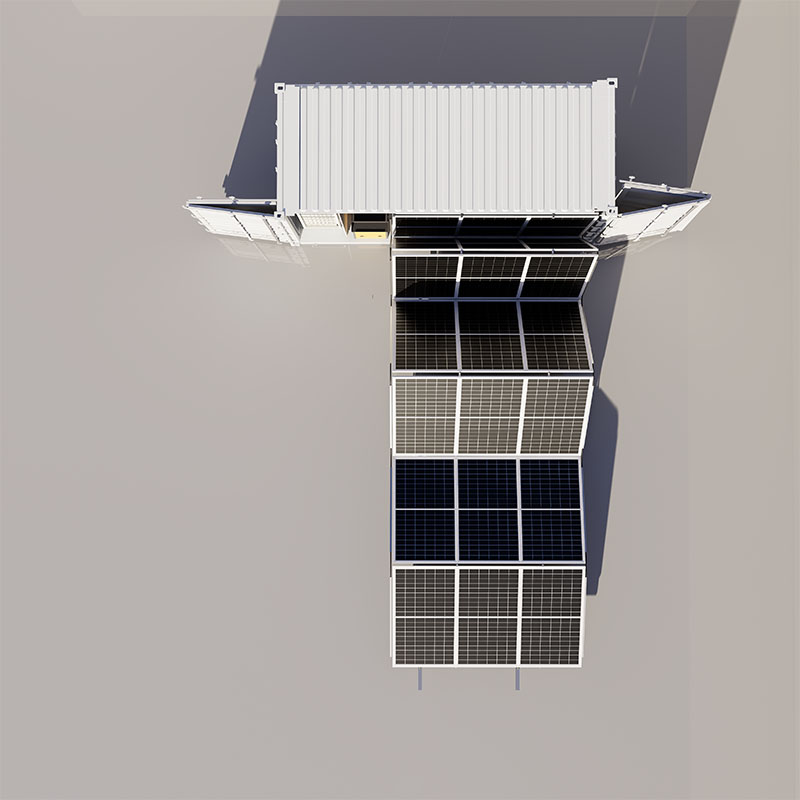 M-POWER MP20HQ-78KW/128KWH Integrated PV, Battery and Diesel ContainerCombines 78kWp solar, 128kWh lithium storage, and 75kVA diesel generation in a factory-integrated 20HQ container for continuous off-grid duty.View Product →
For a wider view of how mobile generation is displacing fixed connections at remote sites, see this analysis of the last mile of off-grid power.
Scaling and Relocation
Load rarely stays where the first purchase order assumed it was. A construction camp that starts with a 60 kW load can double after a second shift is added, and a mining contractor may move the whole plant 40 km in year three. Modular designs address both by treating the container as one unit in a parallel array: two 125 kW blocks behave as a 250 kW system through a shared EMS, and the same units can be split across sites if the project shrinks.
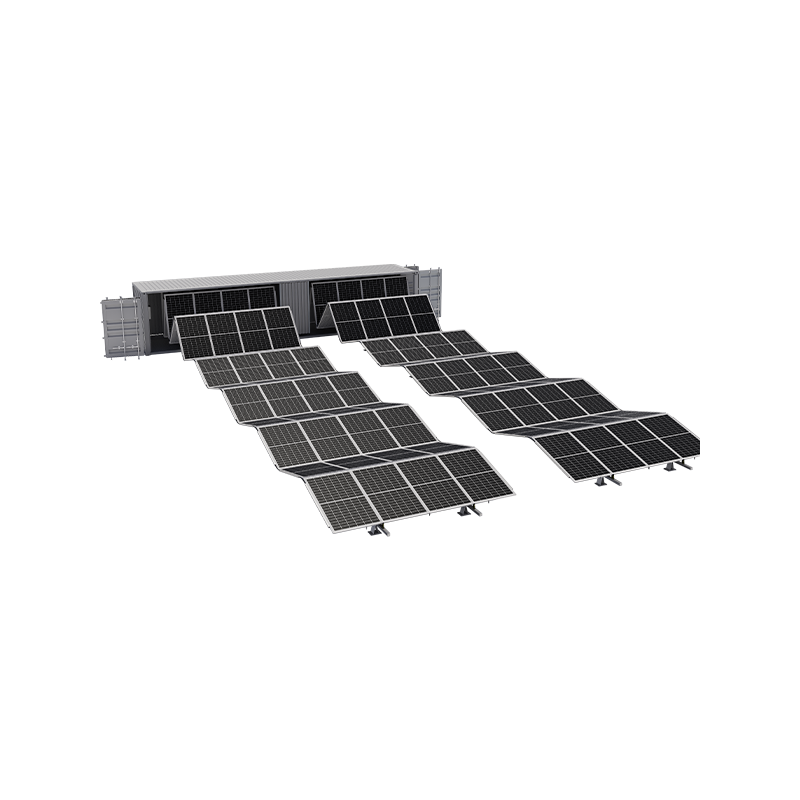
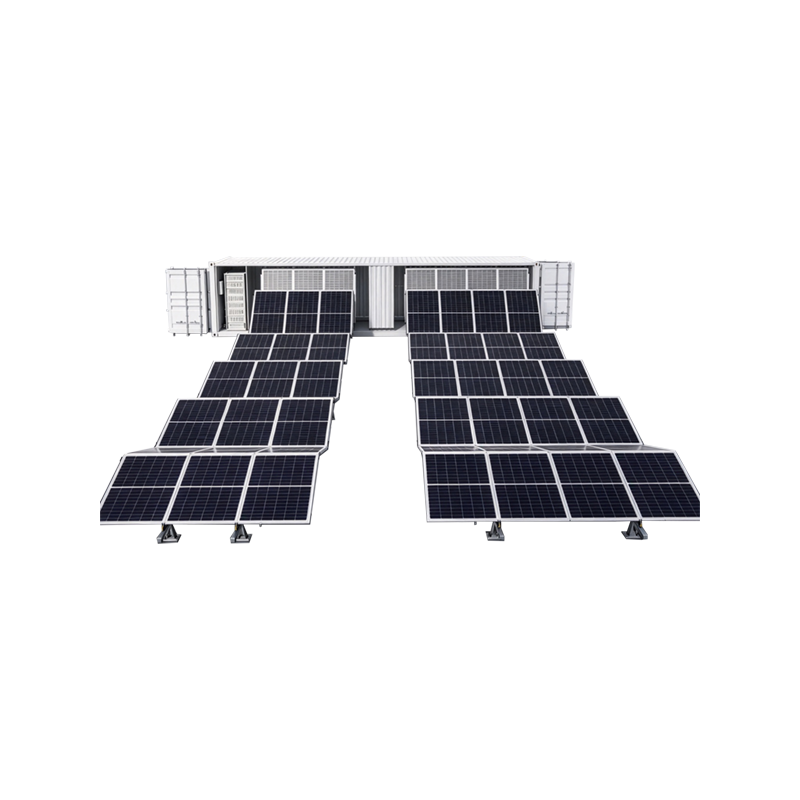
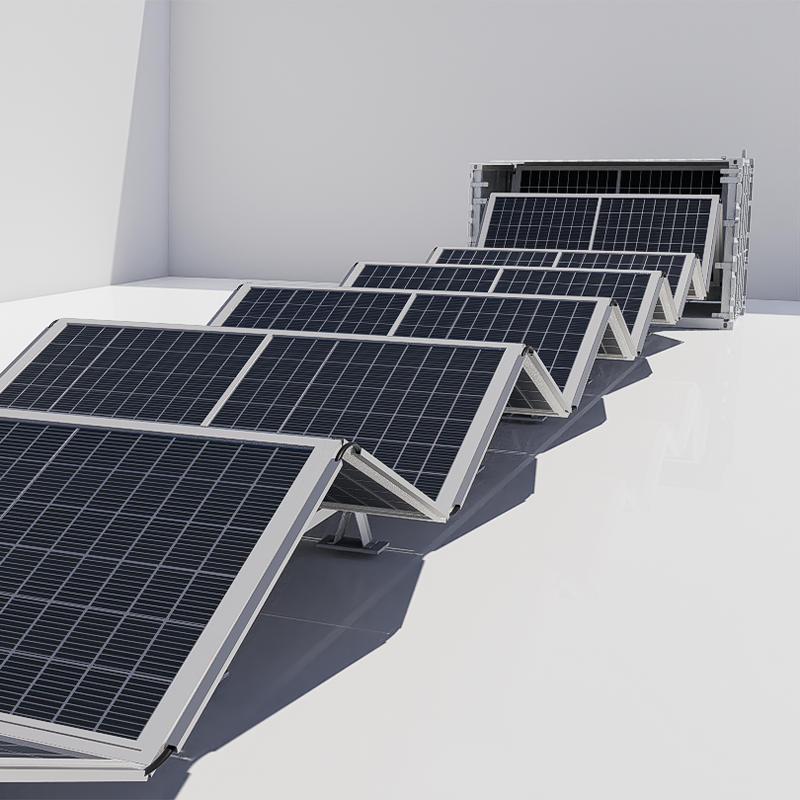 MP08GP24KW Modular Containerized Solar Power System for Remote SitesA compact 24kW solar unit with 36 TOPCon panels and adjustable racking; optional inverter supports grid-tied, off-grid, or diesel-hybrid use.View Product →
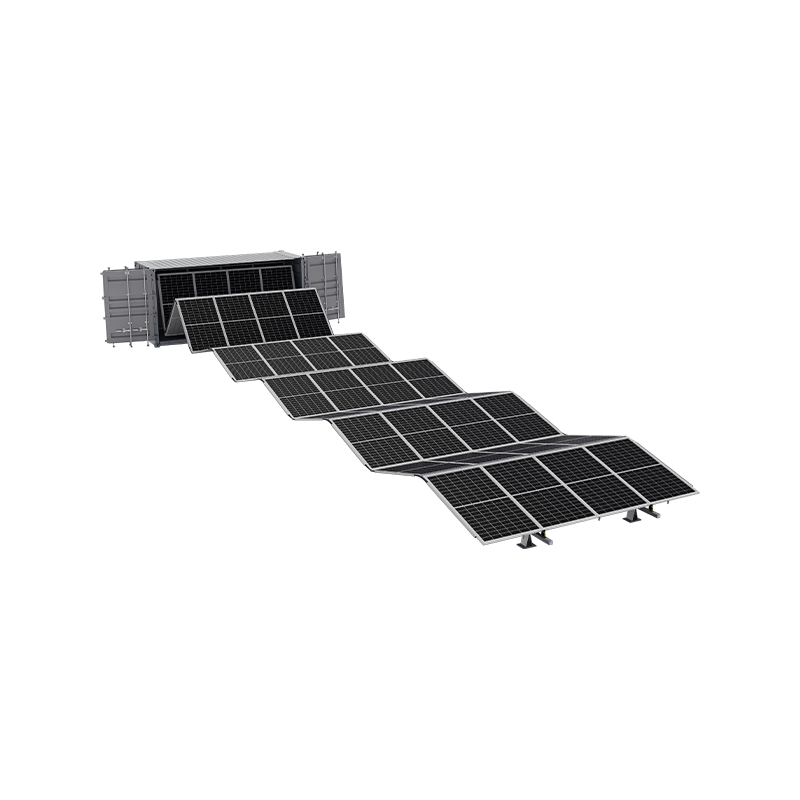
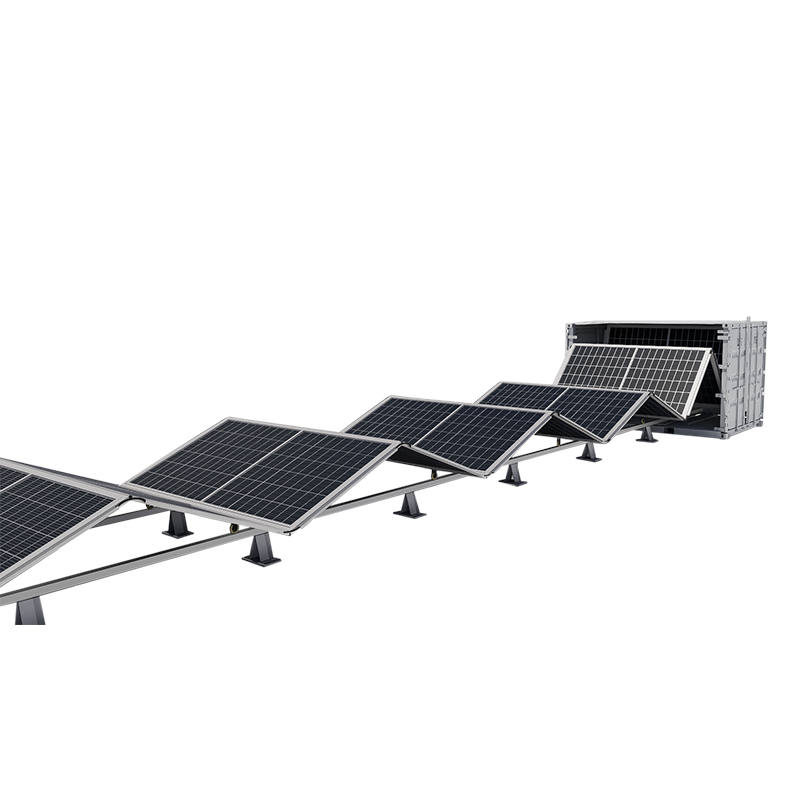
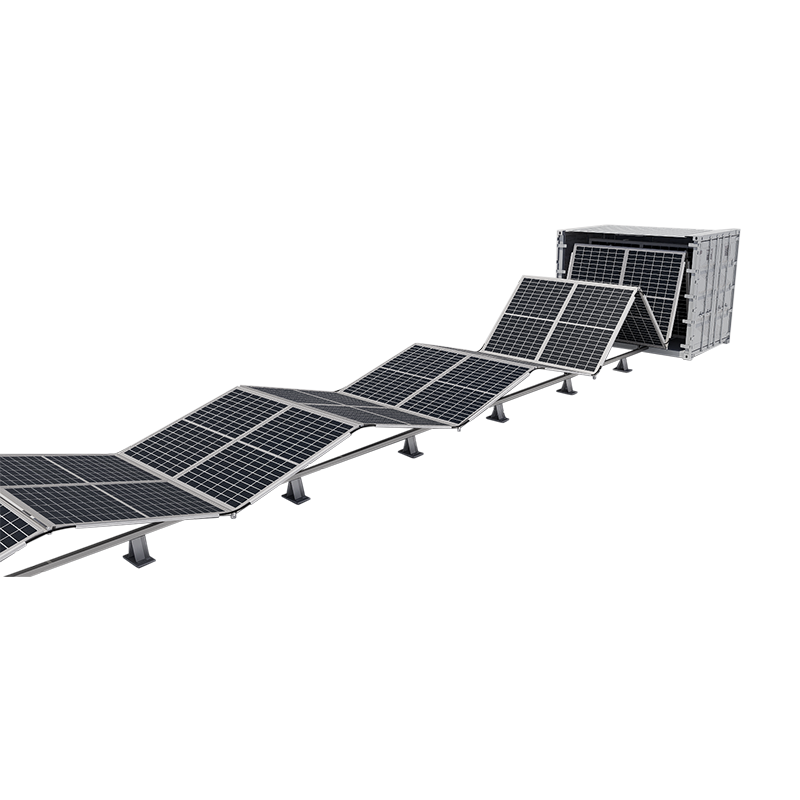
Portable and scalable PV-ESS containers go further and ship with array and mounting structure integrated, so deployment becomes a matter of positioning, levelling, connecting the load and commissioning, measured in days rather than the weeks a fixed plant requires.
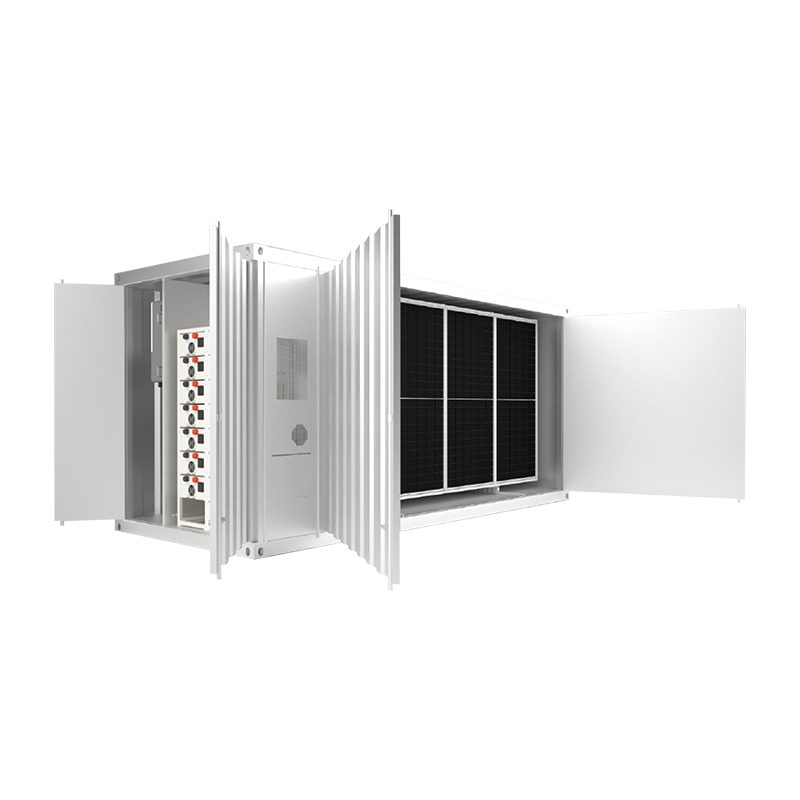 MP20HQ-110KW/241KWH Portable PV and Energy Storage ContainerA pre-engineered 20HQ microgrid with 110kWp solar, 241kWh battery storage, and aluminum racking for faster on-site deployment.View Product →
What to Write Into the Specification
Most disputes on container storage projects trace back to omissions rather than defects. A short list covers the majority of them:
- Usable energy and continuous power at a stated ambient temperature, not nameplate figures at 25 °C.
- Depth of discharge, cycle count and end-of-warranty retention, typically 70 percent after 6,000 to 8,000 cycles.
- Thermal data: heat rejection at 45 °C ambient, cooling redundancy, and the temperature above which the system derates.
- Fire suppression standard, detection method, and the isolation logic that follows an alarm.
- Interface details: voltage and frequency window, protection settings, anti-islanding behaviour.
- Communication protocol, documentation, spare parts list, commissioning scope and service response time.
Where Containers Beat Fixed Plants
Four settings recur. Construction and drilling sites where a grid connection would cost more than the equipment. Mining and quarrying operations that relocate every few years. Events and temporary camps needing power for weeks rather than decades. And emergency response, where the requirement is a working supply the same day the unit arrives.
Storage containers are rarely the whole story on those sites, because lighting and surveillance are usually needed at the same time. Trailer-mounted towers with monocrystalline panels and a 7,200 Wh battery cover night lighting and small loads, while surveillance variants add a 9,600 Wh battery, a rotatable head or a manual winch mast for lifting a camera above vehicle height. These are grouped commercially as portable solar lighting and surveillance units, and they share the same solar-plus-storage logic as the larger boxes.
The order of decisions is fixed: load profile, reliability target, then energy and power, then enclosure and cooling, and only then the supplier. A container energy storage system matched to that sequence will generally run its full cycle life with routine maintenance. One specified from a datasheet alone tends to reveal its shortcomings on the hottest afternoon of the first summer.
You May Also Like
Copyright © Ampora Technology Co., Ltd. All Rights Reserved.
Mobile Solar Container Manufacturers Solar Power Container Solution