

 English
 русский
 عربى
10/10/2026 Industry
BESS Battery Energy Storage System Container: Sizing, Delivery and Off-Grid Use
Content
- 1 What a Containerized BESS Actually Contains
- 2 Sizing the Container: Four Numbers That Decide the Design
- 3 When Solar, Storage and a Generator Share One Container
- 4 Procurement Checks That Prevent Costly Surprises
- 5 Heat, Cold, Dust and Salt: What Field Conditions Do to the Design
- 6 Where Containerized Storage Earns Its Keep
- 7 Matching the Container to the Project
A 20-foot container lands on a gravel pad 40 km from the nearest transformer. By evening it is exporting 250 kW, and two cloudy days later it is still carrying the site load without a diesel top-up. That outcome is achievable with a BESS battery energy storage system container, but only when the sizing, the thermal design and the logistics are settled before the order is placed rather than after.
The short answer first: a containerized BESS is a factory-built, factory-tested power plant shipped as freight. Battery racks, power conversion, thermal management, fire protection and an energy management system arrive inside a standard ISO enclosure, wired and commissioned as a single unit. Most of the engineering moves off the construction site and into the factory, which is why delivery in weeks rather than years is realistic.
What follows covers the decisions that determine whether that promise survives contact with the site: what belongs inside the container, how to size it, what to verify during procurement, and where different configurations actually pay off.
What a Containerized BESS Actually Contains
Strip away the marketing and a BESS container holds five functional blocks: battery modules and racks; a power conversion system that moves energy between DC and AC; thermal management; protection and safety equipment; and the energy management system that decides when to charge and discharge.
The enclosure is the least glamorous element and often the most consequential. A standard ISO frame brings known footprints, documented lifting points, proven transport behaviour and freight rates any forwarder can quote. Purpose-built skids rarely beat that on total delivered cost, even when the cell price per kilowatt-hour looks lower.
| Attribute | Containerized BESS | Battery room | Diesel only |
|---|---|---|---|
| Typical lead time | 8-16 weeks | 6-12 months | 4-10 weeks |
| Civil works | Pad and cable trench | Building, HVAC, fire walls | Pad and fuel bund |
| Scalability | Add units in parallel | Disruptive and costly | More sets, more fuel |
| Running cost | Low, no fuel | Low, no fuel | High, fuel and service |
| Relocation | Lift and move | Not practical | Possible |
Sizing the Container: Four Numbers That Decide the Design
Sizing arguments usually circle four numbers. Get any one of them wrong and the container becomes either stranded capital or an under-delivering asset.
- Usable energy, not nameplate energy. A 1 MWh pack at 90% depth of discharge and 95% state of health delivers roughly 855 kWh. Plan against the end-of-warranty figure, not the first-day one.
- C-rate. A pack rated at 0.5C delivers 500 kW from 1 MWh. If the load profile contains 15-minute peaks, that rating, not the energy figure, sets the size.
- Auxiliary load. Thermal management, controls and transformers typically consume 2-5% of throughput, and in hot climates the cooling system can pull several kilowatts continuously.
- Transport envelope. A 20-foot unit can weigh 20-30 tonnes; 40-foot units reach 35 tonnes and beyond. Confirm crane capacity, axle limits on the final road leg and pad bearing pressure before confirming the order.
Where the load is fixed and modest, a single convenient 120 kW-class unit often covers the site at the lowest cost: standard 20-foot frame, general-cargo shipping, and paralleling later if the load grows.
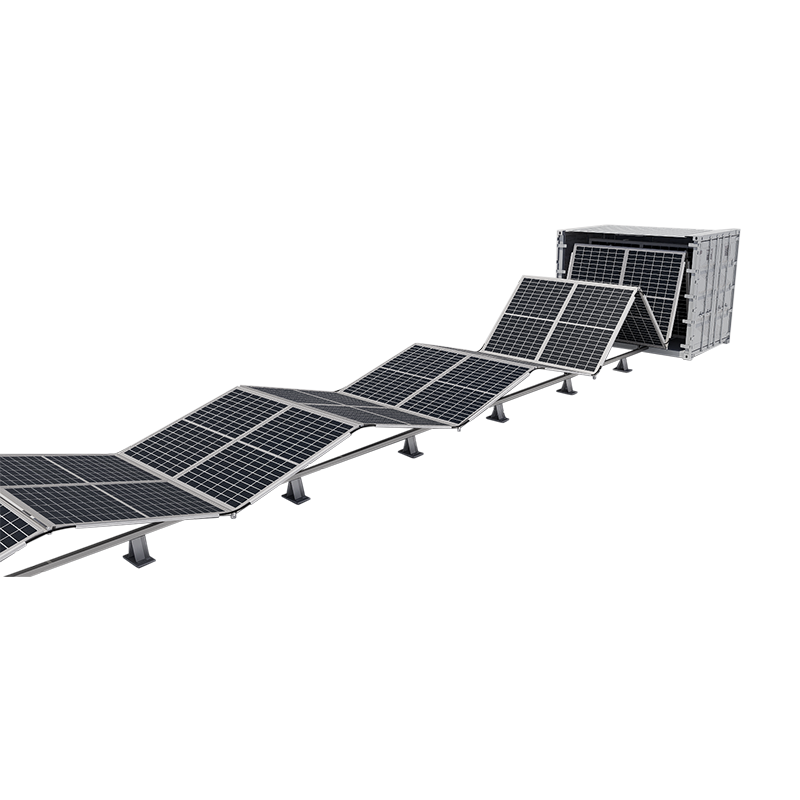
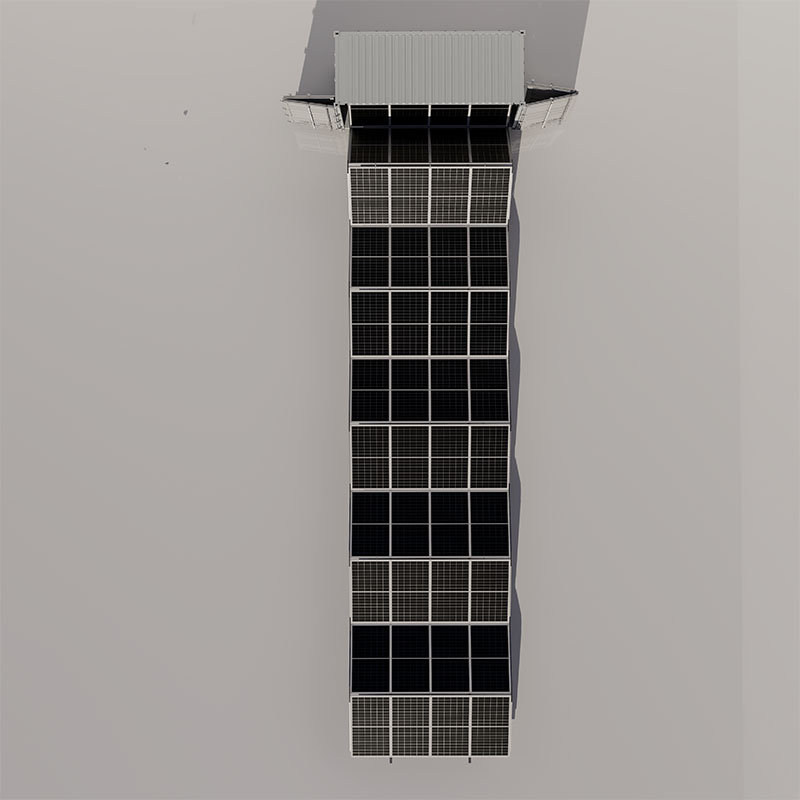 MP20HQ-120KW Integrated Containerized Solar Power SystemA convenient 120 kW-class, pre-wired 20-foot container with 184 Topcon panels and adjustable racking for small bases, construction sites, and emergency deployments.View Product →
Pure battery storage works when the sun shines and the outage lasts hours. It struggles when autonomy stretches to days. That is the case for hybridizing: solar arrays charge during daylight, the battery carries the load through the evening and absorbs load steps, and a diesel generator covers multi-day deficits. Integrated PV-BESS-DG containers put all three on one control platform.
The benefit is not fuel saving alone. A generator held at 20% load for hours will wet-stack, glaze its cylinders and shorten its own service life. With a battery in front of it, the set starts, runs near its efficient band and shuts down. Hybrid sites routinely report fuel reductions of 30-60% against generator-only operation, plus noticeably longer maintenance intervals.
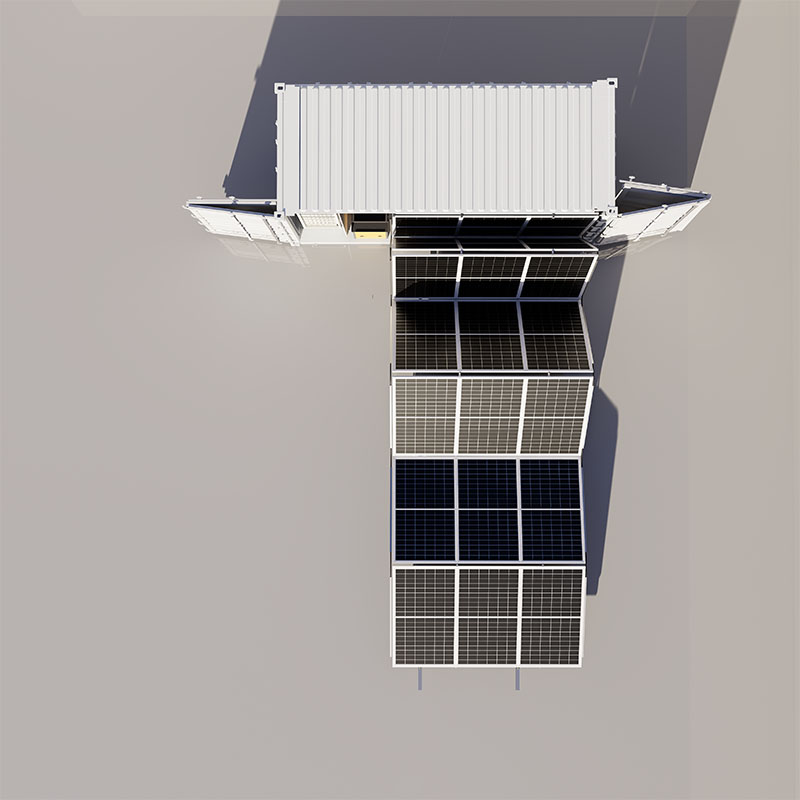 MP78-60 Integrated PV-BESS-Diesel Containerized Hybrid Power SystemAn all-in-one 78kWp PV, 128kWh battery, and 75kVA diesel container that coordinates hybrid power to cut fuel use and generator runtime.View Product →
Procurement Checks That Prevent Costly Surprises
Container pricing hides several cost centres. Ask for these in writing before comparing quotations:
- Certification scope. Cell, module and unit-level test reports plus system-level standards must cover the exact configuration being sold, not a sibling product.
- Control openness. Modbus TCP, IEC 61850 or DNP3 access to the EMS matters if the container must talk to site SCADA or a microgrid controller. Cloud-only interfaces become a lifecycle risk.
- Fire strategy. Detection, suppression, deflagration venting and separation distances all influence pad layout and insurance terms.
- Warranty boundaries. Cell throughput, power conversion and system warranties are often issued by different parties. Know who answers the phone in year seven.
- Commissioning support. Remote diagnostics plus on-site commissioning hours should be a line item, not an assumption.
Logistics deserve their own line. Weight, centre of gravity, lifting lugs and the condition of the final road leg decide whether the container arrives as an asset or as a claim. Teams that have moved mobile power equipment into remote territory tend to plan that last mile before they finalise the electrical design.
Heat, Cold, Dust and Salt: What Field Conditions Do to the Design
Ambient temperature is the most common source of performance complaints. Above 40°C, lithium iron phosphate cells derate while the cooling system works harder, so capacity and parasitic load both move against you. Below 0°C, charging must be blocked or the cells pre-heated; a battery management system that ignores this quietly destroys cycle life. Coastal and mining sites push enclosure protection toward C4 or C5-M corrosion classes, and dusty sites need filter service schedules that somebody on site will actually follow. If a container is specified for 45°C ambient and deployed at 50°C, the fault lies in the specification, not the product.
Where Containerized Storage Earns Its Keep
Four patterns account for most off-grid containerized deployments:
- Construction and mining camps. Large, temporary loads that move as the works front advances.
- Telecom and remote infrastructure. Small continuous loads where fuelling and servicing a generator is expensive.
- Events, rental fleets and film sets. Silent power, no exhaust, fast redeployment between sites.
- Emergency response and field operations. Lighting, communications and medical equipment that cannot wait for a grid connection.
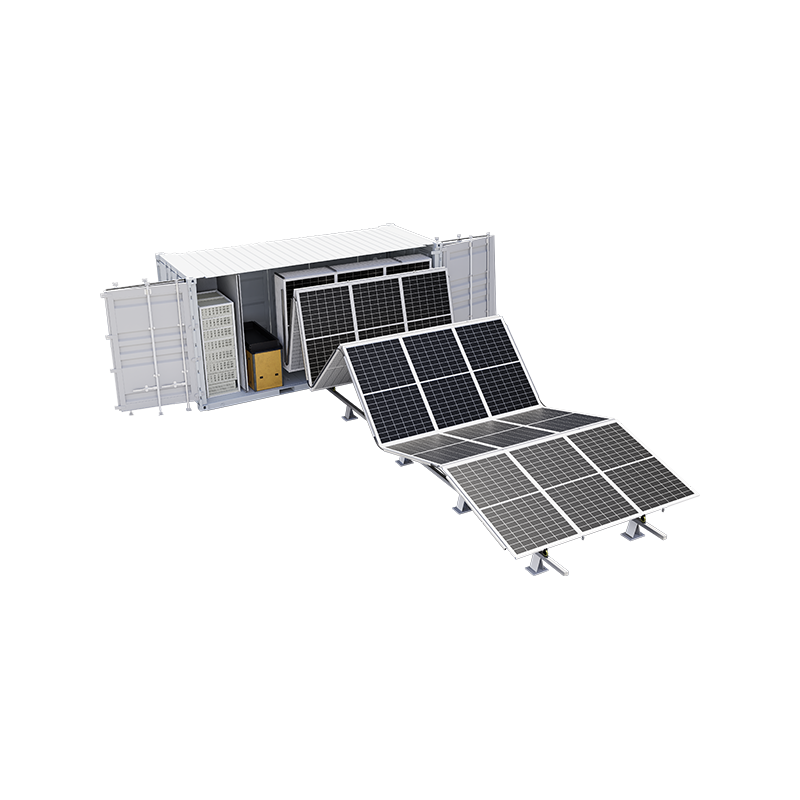
Capacity needs differ sharply across these cases. A rental fleet wants modular units it can stack or split; an emergency team wants something towable behind a pickup and set up by two people. That is why a portable, scalable PV-ESS container sits alongside larger fixed-capacity options in most supplier ranges: the same battery architecture, a different transport and expansion philosophy.
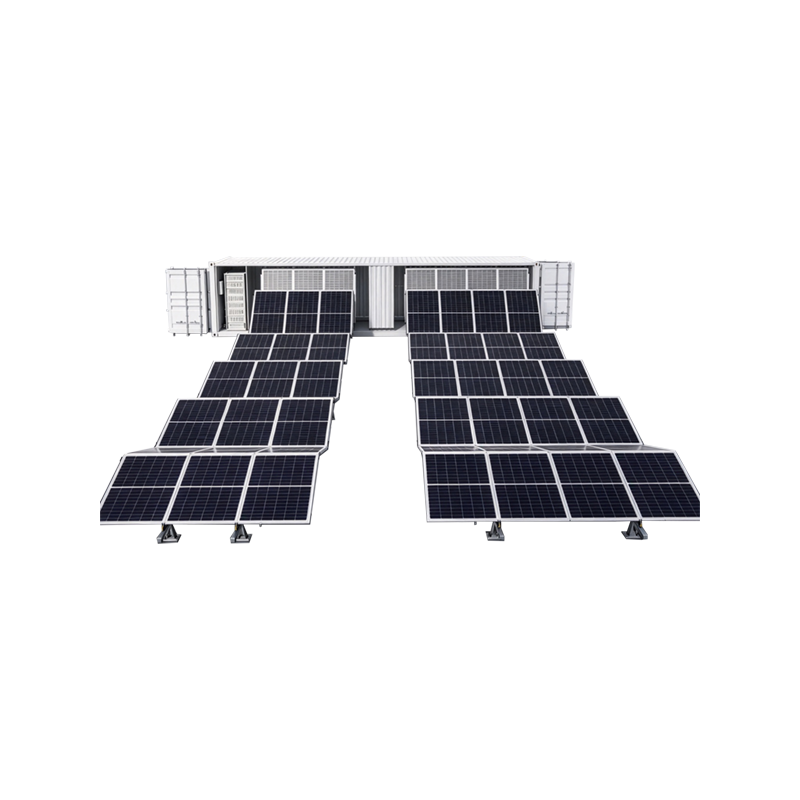
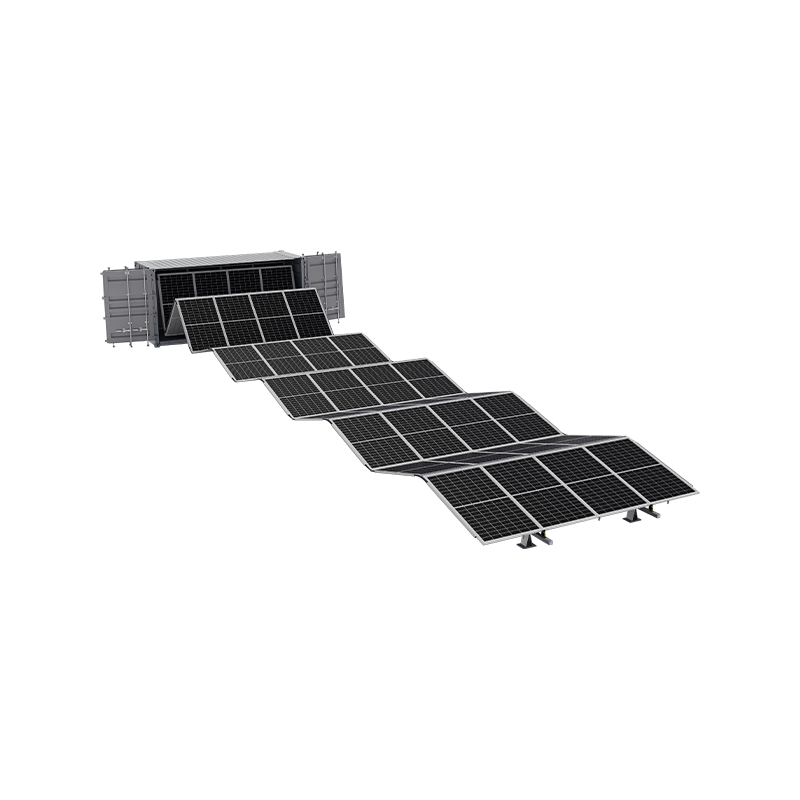
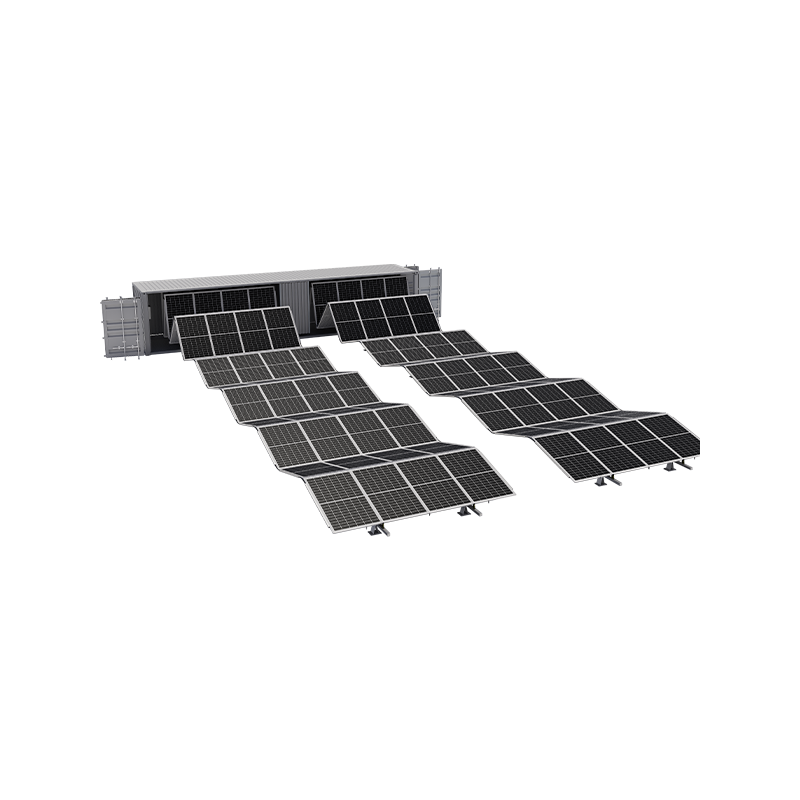
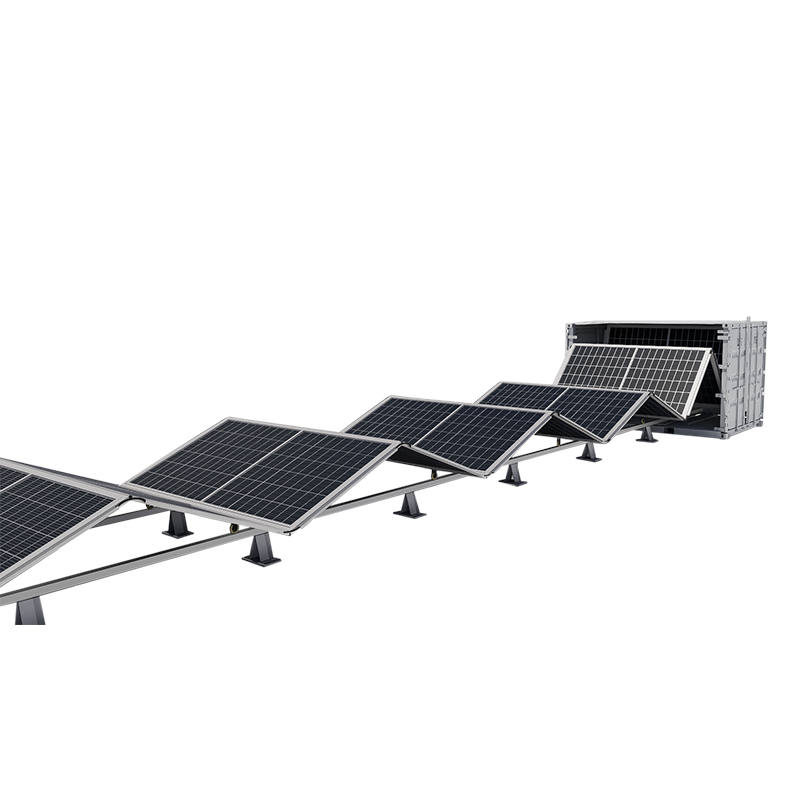
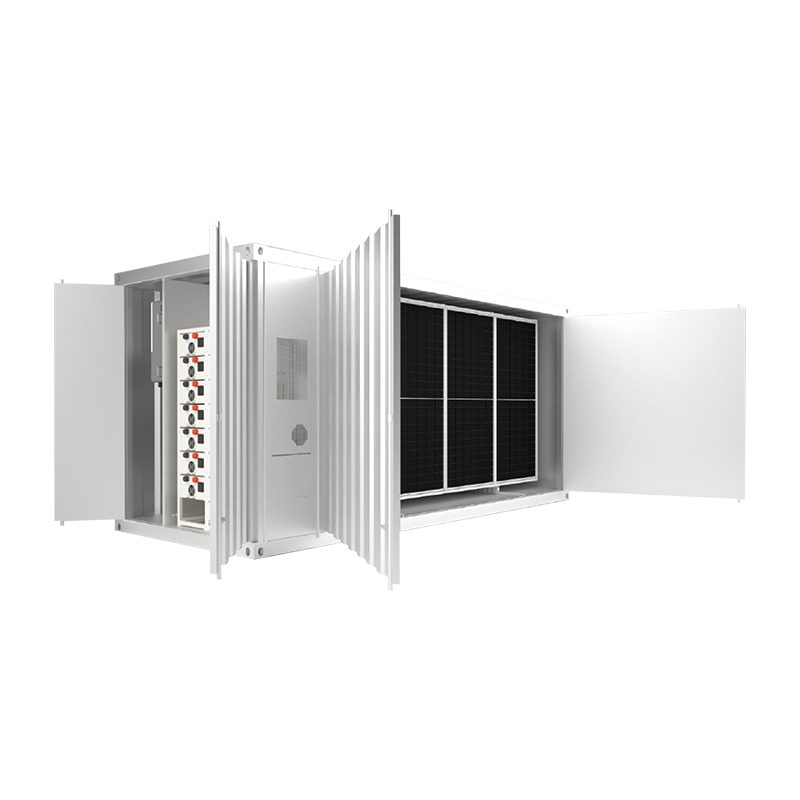 MP20HQ-110KW/241KWH Portable Scalable PV and ESS ContainerA modular, pre-wired 20-foot PV and battery storage container with 110 kWp solar and 241 kWh capacity for off-grid, mining, and emergency power.View Product →
Matching the Container to the Project
A short sequence keeps specification arguments from circling:
- Measure the load for at least a week, including the peaks nobody mentions in the kick-off meeting.
- Decide autonomy in hours, then in days. That one number separates a storage-only design from a hybrid one.
- Set the reserve: how much capacity must remain after the worst design day.
- Confirm the logistics envelope, including weight, lifting, road access and pad.
- Fix the interface: voltage, protection settings, protocol, and who owns the microgrid controller.
- Agree spares, service intervals and remote monitoring before shipment, not after commissioning.
Doing steps two and six properly is what separates a container that runs for fifteen years from one that becomes a spare-parts problem in year three. On a first deployment, working with a supplier that also provides installation guidance and project services is usually worth more than a marginal discount on hardware.
A containerized BESS is not a commodity box of batteries. It is a system whose economics are set by usable energy, C-rate, auxiliary load and the transport envelope, and whose reliability is set by thermal design, control openness and the quality of commissioning. Decide those four numbers first, then compare quotations on the same basis.
The practical next step is unglamorous: collect a week of load data, note the peak, the daily cycle and the longest expected cloudy spell, and confirm the site can receive and set the container. With those three facts, sizing becomes arithmetic rather than negotiation.
You May Also Like
Copyright © Ampora Technology Co., Ltd. All Rights Reserved.
Mobile Solar Container Manufacturers Solar Power Container Solution