

 English
 русский
 عربى
26/10/2026 Industry
Container Specs for Integrated Containerized Solar Power Generation Systems
Content
- 1 The ISO envelope: what standard container specs actually give you
- 2 Enclosure specs that change usable volume: insulation, HVAC, and fire protection
- 3 Payload, floor loading, and center of gravity
- 4 Transport, lifting, and site access: the specs that fail on delivery day
- 5 How to read a supplier datasheet without guessing
- 6 Match container specs to the load profile, not the brochure
A 20ft ISO container looks generous until you subtract battery racks, inverter cabinets, fire suppression, and service aisles. On a 120 kW mobile solar project, the gap between a nominal 33 m3 and usable equipment space often comes down to door opening, clear width, and roof reinforcement, not panel count. The practical conclusion is simple: container specs come first, power architecture second. For an Integrated Containerized Solar Power Generation System, the box is not packaging. It is the structural, thermal, and transport envelope that decides what can be installed, lifted, shipped, and maintained.
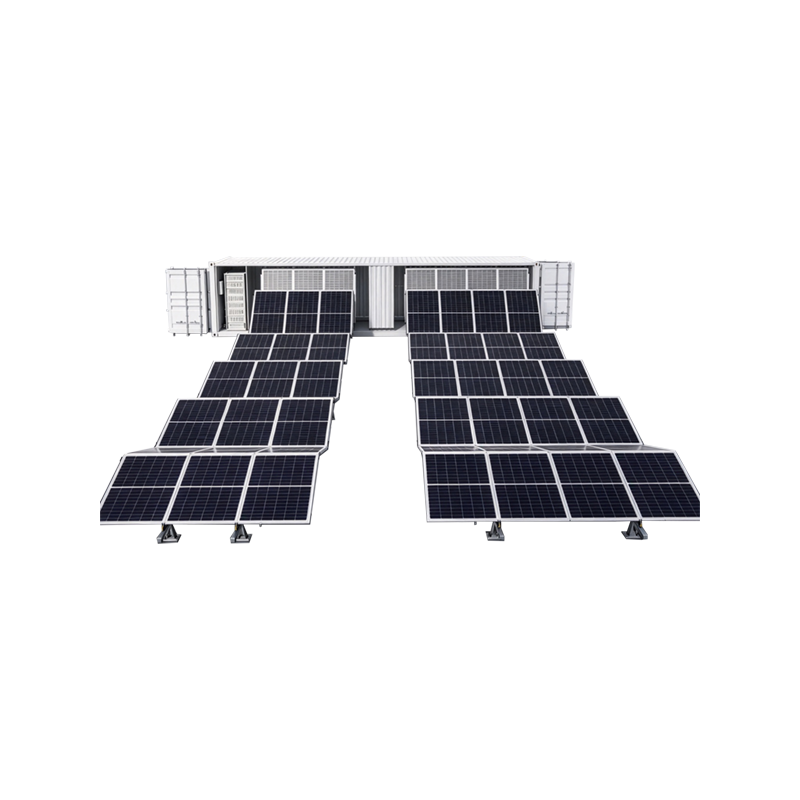
Ampora Technology builds its mobile solar container range around that reality. The Integrated Containerized Solar Power Generation System family covers modular, scalable, hybrid, and all-in-one configurations, but every variant still has to fit inside a known ISO envelope and arrive on site as a safe, liftable unit.
The ISO envelope: what standard container specs actually give you
Start with ISO 668 external dimensions and ISO 1496-1 structural requirements. These are the numbers that govern road transport, ship stowage, crane lifting, and twist-lock compatibility. The table below shows typical nominal values for common dry containers. Treat them as a starting point, not a final design input.
| Container | External L x W x H (m) | Internal L x W x H (m) | Typical payload (kg) | Nominal volume (m3) |
|---|---|---|---|---|
| 20ft GP | 6.06 x 2.44 x 2.59 | 5.90 x 2.35 x 2.39 | 28,200 | 33.2 |
| 40ft GP | 12.19 x 2.44 x 2.59 | 12.03 x 2.35 x 2.39 | 26,700 | 67.7 |
| 40ft HC | 12.19 x 2.44 x 2.90 | 12.03 x 2.35 x 2.70 | 26,500 | 76.4 |
| 45ft HC | 13.72 x 2.44 x 2.90 | 13.56 x 2.35 x 2.70 | 29,500 | 86.0 |
The internal height is only part of the story. A 40ft high cube may show 2.70 m inside, but the door opening is lower, often around 2.28 m on a 20ft unit and close to 2.58 m on a high cube. If the battery skid or inverter frame is built to the internal height, it may not pass through the doors. Check door width, door height, and the clearance created by locking bars and hinges. Also check the forklift pocket rating: many pockets are rated for an empty container, not a fully loaded solar power unit.
Enclosure specs that change usable volume: insulation, HVAC, and fire protection
Once the ISO shell is fixed, every internal finish consumes space. A 50 mm insulated sandwich panel on both side walls removes roughly 100 mm from the clear width. A ceiling-mounted HVAC unit, fire detection piping, cable trays, and a service aisle can remove another 400 to 700 mm. That is why two containers with the same external length can have very different equipment layouts.
For battery-based systems, thermal specs matter as much as dimensions. Lithium iron phosphate racks are usually happiest within a 15 to 35 degrees C operating window, and a container in direct sun can exceed 50 degrees C internally without shading, ventilation, or active cooling. Ask for the enclosure U-value, the HVAC capacity at the expected ambient temperature, and the air-change rate. For fire protection, ask whether detection covers the battery bay, whether suppression is aerosol, clean agent, or water mist, and how the system is isolated when the doors are open for service.
Ingress protection is another specification that is often overstated. IP54 may be adequate for a clean industrial yard, but a dusty construction site or coastal project may need IP55, filtered vents, and corrosion-resistant hardware. Cable entries should be specified as glands, not open cutouts, and the entry height should sit above the local flood or wash-down line.
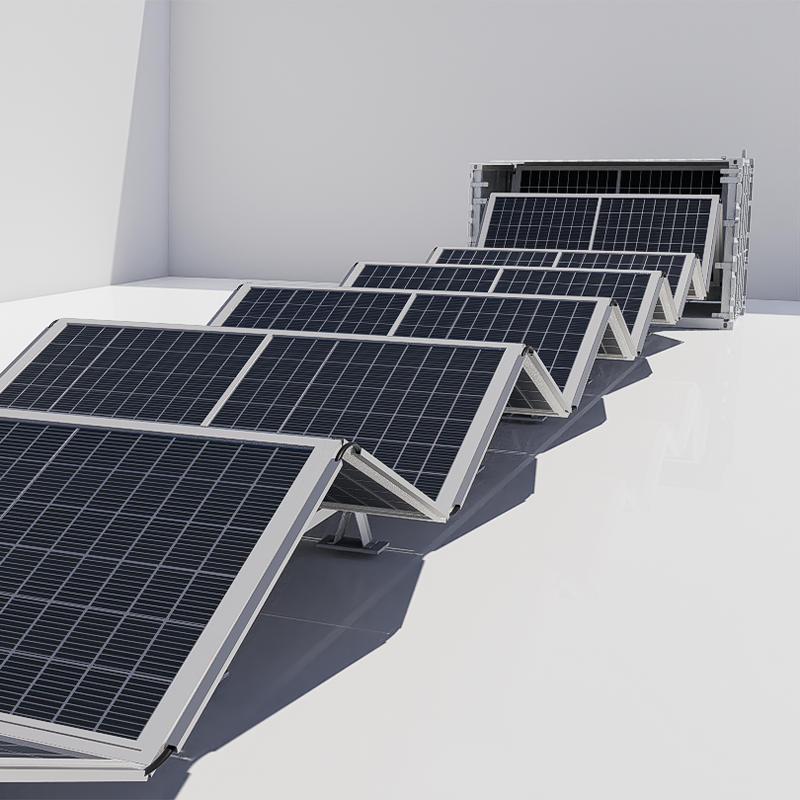 MP08GP-24KW Modular Containerized Solar Power SystemFactory-integrated 24 kW solar system in a compact 08GP container with 36 TOPCon panels and adjustable racking for remote or space-constrained sites.View Product →
Payload, floor loading, and center of gravity
Payload is not a single number to compare in a brochure. A 20ft container may offer around 28 tonnes of payload, but a solar power system concentrates weight in a few places. A single 100 kWh LFP rack can weigh well over a tonne. Four racks, an inverter, a transformer, fire suppression, and cable management can consume most of a 20ft payload before any PV modules or diesel generator are added.
Check floor point-load ratings, not just total payload. Battery racks often sit on a few small feet, and a forklift moving a rack into position can create a local load far above the uniform floor rating. If the container will be lifted with equipment installed, confirm that the lifting points and corner castings are rated for the loaded gross weight. Also ask for the center of gravity in the transport condition. An off-center battery bank can make a legal road load unsafe even when the total weight is within the trailer limit.
Scalability adds another layer. A portable and scalable PV-ESS container may be designed to add battery modules later, but the floor, busbar, and HVAC capacity must already account for that future weight and heat load. If the expansion is not included in the original container specs, the system may run out of usable capacity long before it runs out of physical space.
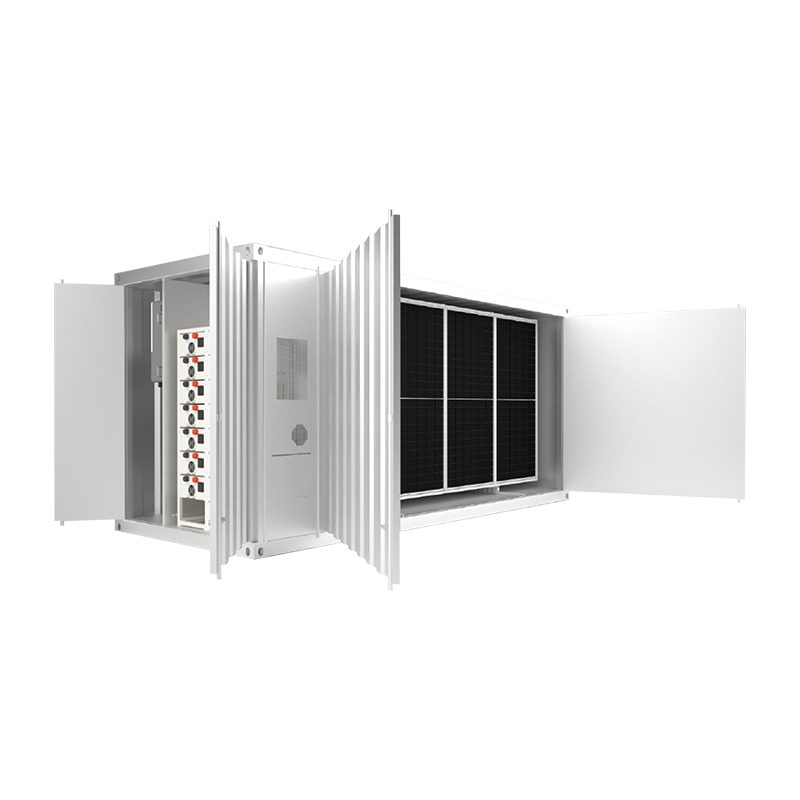 MP20HQ-110KW/241KWH Portable PV and ESS ContainerA factory-tested 20HQ microgrid with 110 kWp PV and 241 kWh battery storage, designed for scalable off-grid and hybrid deployments.View Product →
Transport, lifting, and site access: the specs that fail on delivery day
A 40ft high cube is 12.19 m long and 2.90 m high. In some markets that is a permit load, and in others it is a routine trailer move. The difference matters for project scheduling. Before the container leaves the factory, confirm the transport height with the trailer deck, the turning radius at the site gate, the crane capacity at the required radius, and the ground bearing pressure at the lifting position.
Corner castings are standardized, but the lifting arrangement is not. Confirm the empty and loaded weight, the approved lifting sling or spreader beam, and whether the container can be lifted by forklift. A loaded solar container should not be moved by forklift pockets unless the supplier explicitly rates that operation. The CSC plate is a useful reference, but it reflects the container shell, not the installed power system.
Access for service is part of the same specification. A door that opens against a fence, a HVAC unit that blocks the cable entry, or a battery rack that cannot be slid out without removing the inverter will cost more over ten years than a slightly larger container costs on day one. Ampora's MP20HQ-120KW convenient system illustrates the trade-off: a 20ft high cube platform can support a 120 kW mobile PV project when the internal layout, cooling, and lifting plan are designed together.
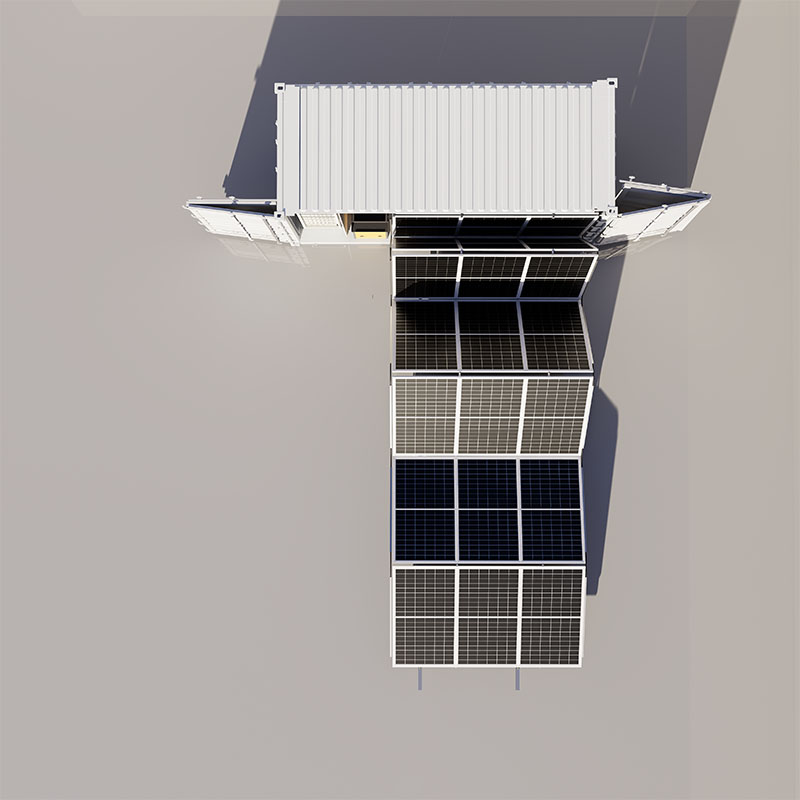 MP20HQ-78KW/128KWH All-in-One PV, BESS and Diesel ContainerA 20HQ all-in-one system combining 78 kWp PV, 128 kWh storage and a 75 kVA diesel generator for off-grid or weak-grid continuous power.View Product →
How to read a supplier datasheet without guessing
A useful container specification sheet should answer dimensional and operational questions in one place. If a value is missing, ask for it before comparing price. The following checklist is a practical minimum.
- External and internal length, width, and height, plus door opening width and height.
- Tare weight, maximum gross weight, and payload in the transport and installed conditions.
- Floor construction, point-load rating, and forklift axle limit.
- Insulation type and thickness, U-value, HVAC capacity, and ventilation rate.
- Fire detection and suppression scope, plus battery bay isolation method.
- IP rating, cable entry type, and corrosion protection for the intended site.
- Lifting points, center of gravity, and approved transport configuration.
- Operating temperature range and derating curve for inverter and battery.
These details also shape the commercial scope. A turnkey project may include shipping, lifting, commissioning, and site acceptance, while a container-only quote may leave those costs with the buyer. Ampora's note on integrated containerized solar power turnkey energy solutions is a useful cross-check when comparing a bare container price against a delivered, commissioned system.
Match container specs to the load profile, not the brochure
The right container size follows from autonomy, load profile, and site access. If the project needs 8 to 12 hours of battery autonomy, a 40ft high cube often makes more sense because the battery volume and thermal management equipment need space. If the load is smaller and the container will move frequently, a 20ft platform with modular racks is easier to transport and lift. If the site has no grid and needs guaranteed continuity, a PV-BESS-DG all-in-one container may be more practical than adding a separate generator later.
Do not choose a container because it looks familiar on a logistics website. Choose it because the internal dimensions, payload, thermal envelope, and lifting plan match the power system. Ask for a dimensioned drawing with door opening, service clearance, center of gravity, and lifting points. Then confirm the container specs against the CSC plate and the actual build. That sequence prevents the most expensive outcome in mobile solar: a fully assembled power plant that cannot leave the factory, or cannot be serviced once it arrives.
You May Also Like
Copyright © Ampora Technology Co., Ltd. All Rights Reserved.
Mobile Solar Container Manufacturers Solar Power Container Solution