

 English
 русский
 عربى
عربى 21/09/2026 Industry
Battery Energy Storage System Container Substation: A Complete Buying Guide
Content
- 1 What Is a Battery Energy Storage System Container Substation?
- 2 Core Components and Specifications to Verify
- 3 Why the Container Format Wins on Schedule and Flexibility
- 4 Sizing, Coupling, and Configuration Choices
- 5 Where Container Substations Deliver the Most Value
- 6 How to Evaluate a Supplier for a Container Substation
A project engineer comparing bids for grid-tied storage often finds that the battery cost is only half the story. The medium-voltage transformer, switchgear, protection relays, and control building can add months to the schedule and tens of thousands of dollars to the civil works budget. A battery energy storage system container substation addresses that problem directly: the storage, power conversion, transformer, and switchgear arrive as one factory-tested unit, and the site team completes cable terminations instead of building a substation from scratch. This article explains what these systems contain, how to size and configure them, and what to verify before you commit to a supplier.
What Is a Battery Energy Storage System Container Substation?
A battery energy storage system container substation is a transportable enclosure, usually based on a 20-foot or 40-foot ISO container footprint, that integrates battery racks, a power conversion system (PCS), a medium-voltage transformer, MV switchgear, and the associated control, cooling, and safety subsystems. The distinction between this and a standard BESS container is the medium-voltage equipment. A conventional storage container ends at the inverter terminals; a container substation continues through the transformer and switchgear up to the point of interconnection with the utility network or site distribution bus.
Depending on the configuration, the unit can operate grid-connected, islanded, or in both modes. Hybrid versions also accept PV inputs, diesel generator inputs, or both, which is how integrated PV-BESS-DG solutions entered the mobile energy market.
Core Components and Specifications to Verify
Every BESS container substation balances electrochemical storage, power electronics, and electrical protection. The table below lists the main subsystems and the parameters worth checking when comparing quotations.
| Subsystem | Function | Key specification to verify |
|---|---|---|
| Battery racks | Store DC energy; most projects now use LFP cells for cycle life and thermal stability | Rated capacity (MWh), cycle life at 80% depth of discharge, temperature range |
| Power conversion system | Converts DC to AC and back; controls charge and discharge power | Rated AC power, maximum efficiency, response time for grid services |
| Medium-voltage transformer | Steps up inverter output to grid voltage such as 10 kV, 20 kV, or 35 kV | Voltage ratio, impedance, cooling class, altitude derating |
| MV switchgear | Protects and isolates the connection to the utility or site network | Short-circuit withstand rating, relay functions, arc-flash mitigation |
| Battery management system | Monitors cell voltage, temperature, and state of charge; initiates protection | Measurement granularity, balancing current, alarm and trip thresholds |
| Energy management system | Coordinates dispatch with the grid operator or microgrid controller | Protocol support (IEC 61850, Modbus TCP), local and remote control modes |
| Thermal management | Keeps cells inside the recommended operating window | Cooling capacity, heating for cold climates, auxiliary power draw |
| Fire detection and suppression | Detects thermal events early and suppresses fire without damaging nearby equipment | Detection type, extinguishing agent, zone coverage, listing or certification |
The transformer and switchgear compartment is what separates a true container substation from a simpler battery container. Confirm that the MV compartment includes sufficient access for cable termination, grounding provisions, and protection relay testing. Some suppliers mount the transformer outside the container on a shared skid; others place it inside. Both approaches work, but the integrated arrangement reduces site interfaces and commissioning time.
Why the Container Format Wins on Schedule and Flexibility
Factory integration produces repeatable quality and complete test records. Since the system is assembled and commissioned at the factory, on-site work is reduced to foundation preparation, cable pulling, and termination checks. A permanent substation can take nine to twelve months from ground-breaking to energization. A container substation is typically commissioned within four to eight weeks after delivery. That difference matters for emergency power requirements, seasonal construction windows, and remote locations where skilled electrical labor is difficult to source.
Deployment follows a short sequence:
- Prepare the site: graded pad, cable trenches, and grounding grid
- Deliver and place the container on the foundation with a crane
- Connect the MV cables, auxiliary power, and communication links
- Commission: test protection relays, verify grid code settings, and train operators
The format also supports relocation. If a load moves or a grid connection changes, the container can be disconnected, transported, and reconnected. For contractors, rental fleets, and emergency response teams, that mobility converts storage from a fixed asset into a reusable tool.
Sizing, Coupling, and Configuration Choices
Two numbers dominate every specification: rated power in megawatts and usable energy in megawatt-hours. The PCS determines how fast the system charges and discharges; the battery determines how long it can sustain that rate. A 1 MW / 2 MWh system, for example, delivers close to two hours at rated power before depth-of-discharge and conversion losses are applied. Most LFP-based systems support 90% to 95% depth of discharge, and round-trip efficiency typically falls between 88% and 94%.
The next decision is coupling. AC-coupled systems connect the storage converter to the same AC bus as PV inverters or diesel generators, which simplifies retrofits. DC-coupled systems route PV directly into the battery DC bus, which improves round-trip efficiency for new solar-plus-storage installations. When the site also depends on diesel generators for long outages or low-solar periods, an all-in-one PV-BESS-DG container unifies all three power sources under one control architecture.
For loads that grow over time, a portable and scalable PV-ESS container lets you add capacity in modular blocks without re-engineering the existing substation interface.
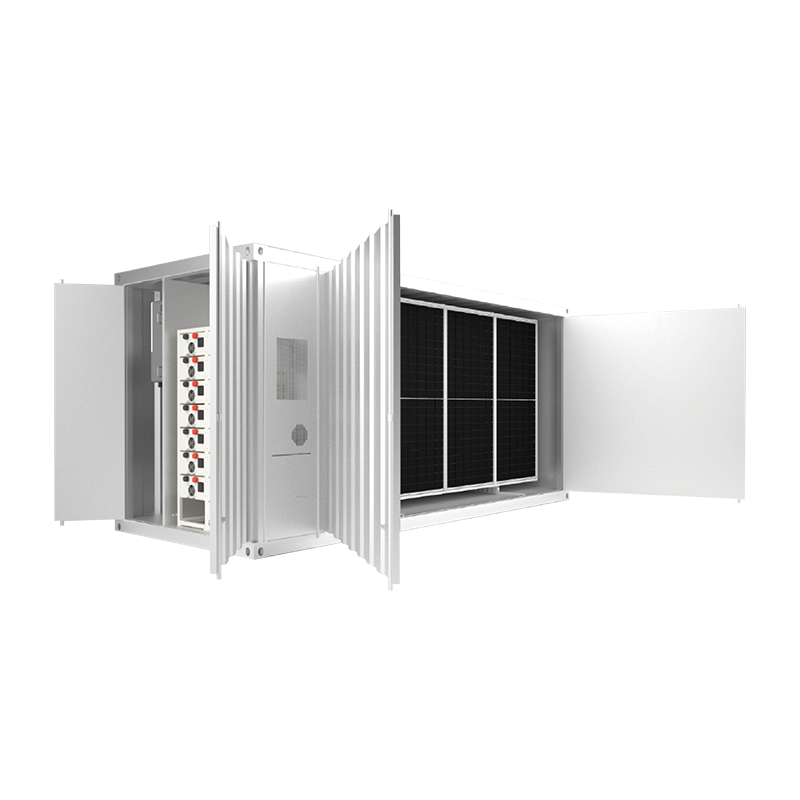 Portable and Scalable PV & ESS Container with 110kWp and 241kWhThis modular microgrid container integrates solar, storage, and inverter in one 20HQ unit, pre-wired and factory-tested for rapid deployment. It suits growing loads and off-grid sites needing expandable capacity without substation re-engineering.View Product →
The table below compares the three common container configurations.
| Configuration | Best suited for | Typical contents | Fuel dependency |
|---|---|---|---|
| BESS container substation | Grid services, peak shaving, backup power | Battery, PCS, transformer, switchgear | None |
| PV + ESS container | Renewable firming, off-grid daytime cycles | Solar input, battery, PCS, transformer, switchgear | None |
| PV + BESS + DG container | Always-on off-grid power, weak-grid reinforcement | Solar input, battery, PCS, diesel genset, transformer, switchgear | Diesel for extended outages and low solar yield |
Where Container Substations Deliver the Most Value
Containerized BESS substations are used in four main situations. The first is grid-scale ancillary services such as frequency regulation and voltage support, where fast response and reliable MV interconnection matter more than physical size. The second is renewable integration, where the storage container shifts solar or wind output into higher-value hours. The broader industry trend is visible in the accelerating deployment of PV-storage integration and virtual power plants, with containerized systems acting as the trading and control interface.
The third situation is off-grid and weak-grid supply for mines, construction sites, remote communities, and industrial camps. These locations need continuous power despite fluctuating renewable output and unstable grids. An all-in-one PV-BESS-DG container handles that sequence automatically: solar charges the battery during the day, the battery carries the evening load, and the diesel genset starts only when battery state of charge falls below the reserve threshold.
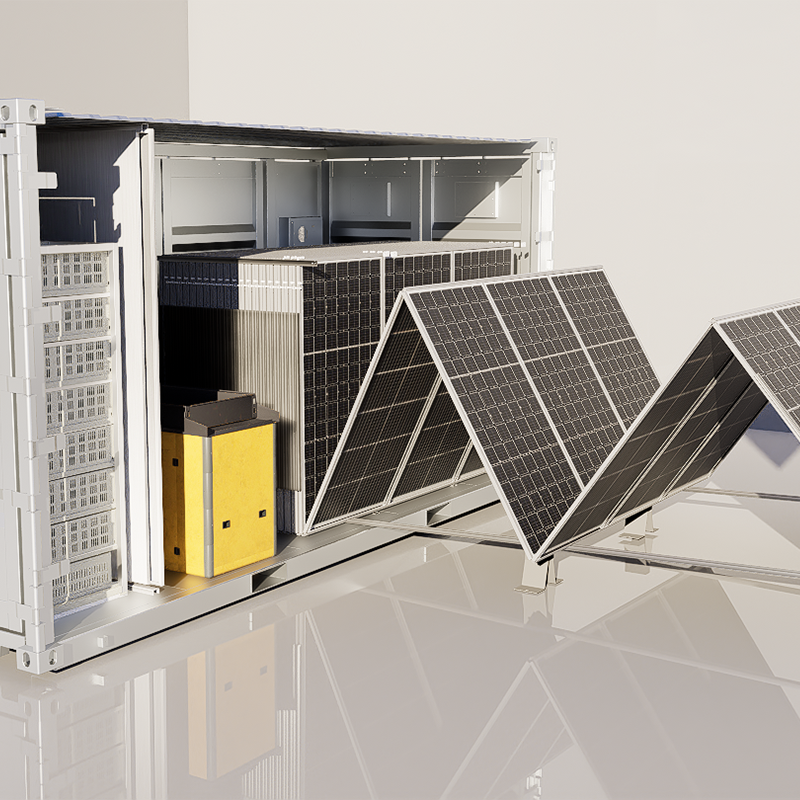 All-in-One PV, Battery, and Diesel Container Power SystemThis integrated container combines 78kWp solar, 128kWh storage, and a 75kVA genset with intelligent EMS for automatic energy coordination. It provides reliable continuous power for off-grid and weak-grid sites like mines, camps, and emergency operations.View Product →
The fourth situation is temporary and emergency power. Mobile container substations can replace a damaged transformer station, support grid maintenance outages, or power a response base during disaster recovery. Seasonal demand peaks in remote work camps also suit this approach, since the container can be redeployed after the season ends.
How to Evaluate a Supplier for a Container Substation
Because a container substation crosses mechanical, electrical, thermal, and safety disciplines, supplier experience matters as much as component brand. Use a short checklist:
- Verified experience in integrating battery, PCS, transformer, and switchgear inside one container
- Test reports and certifications for cells, modules, and the complete system assembly
- Grid code compliance support, including protection relay settings, harmonic studies, and islanding detection
- Configuration flexibility for voltage levels, climate packages, and control protocols
- After-sales support covering commissioning, spare parts, and remote monitoring
Manufacturers with a background in containerized solar generation, such as Ampora Technology, bring practical experience in PV, storage, and diesel hybrid integration to the same enclosure.
If future expansion is likely, choose a modular integrated containerized system that allows additional battery blocks to be added without reworking the switchgear or transformer bay.
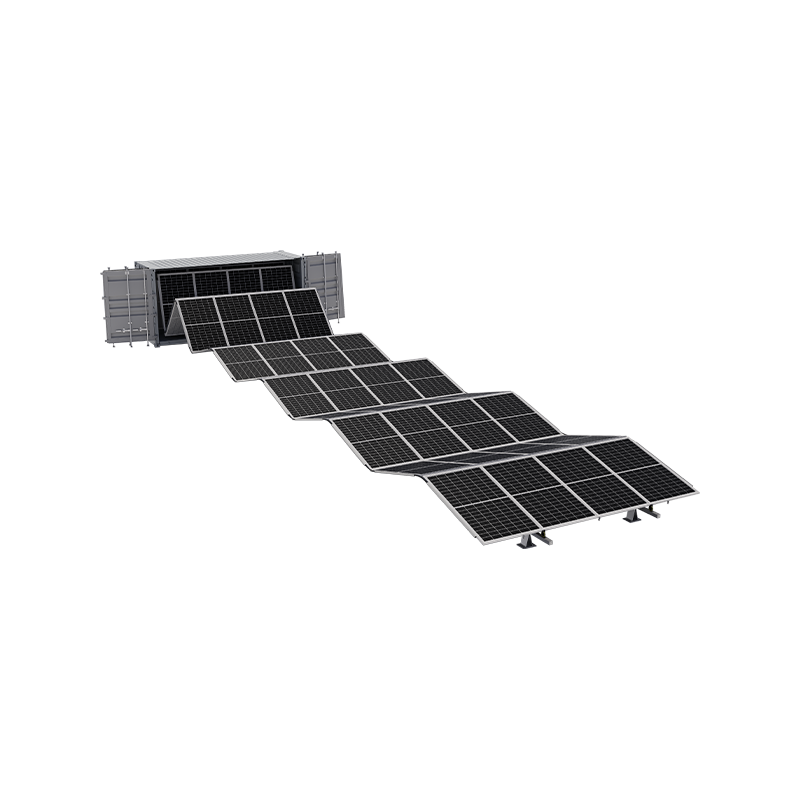
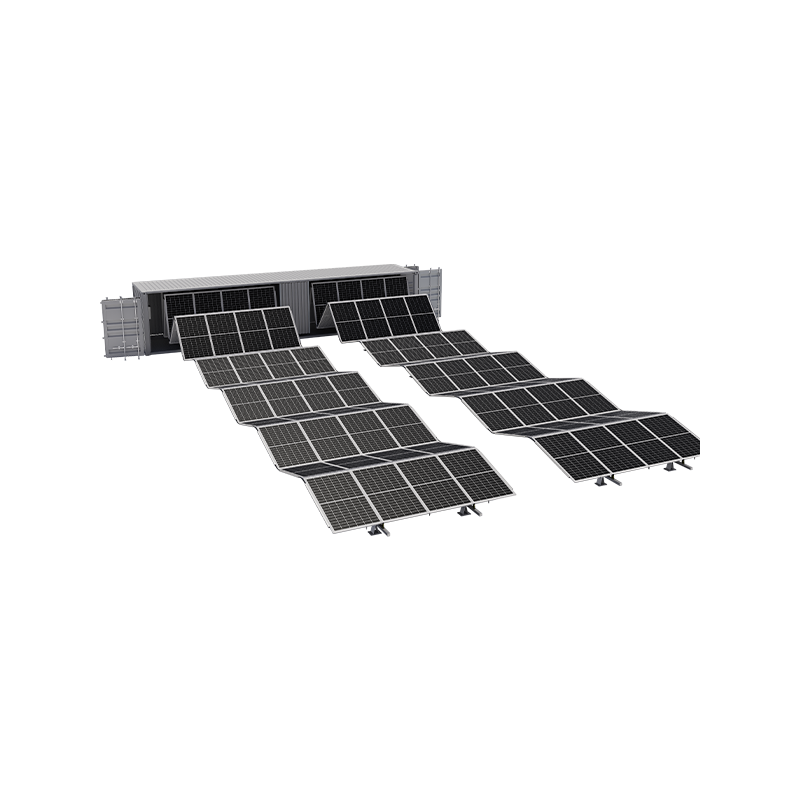
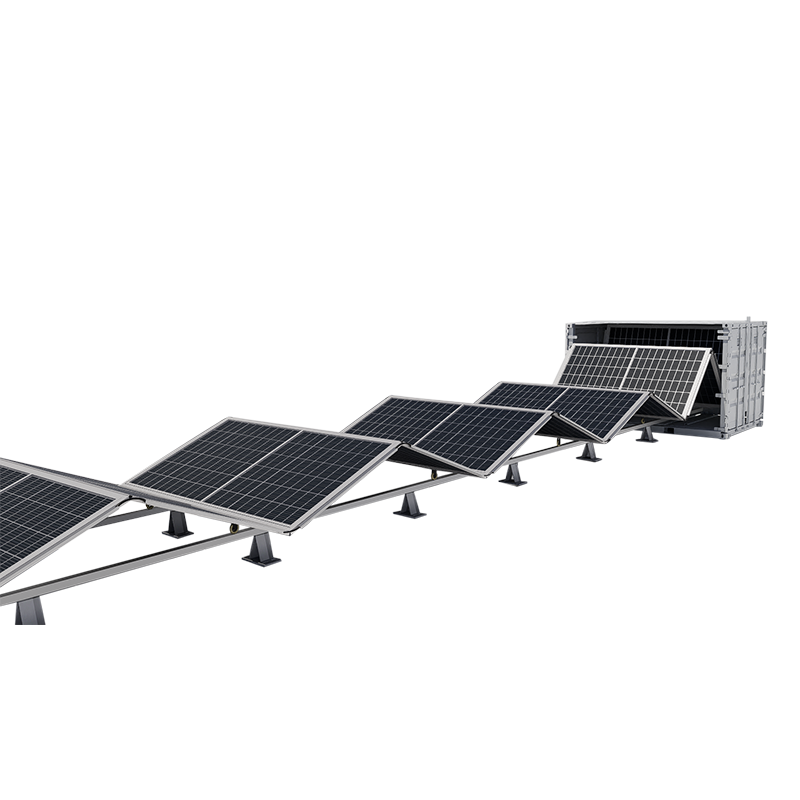
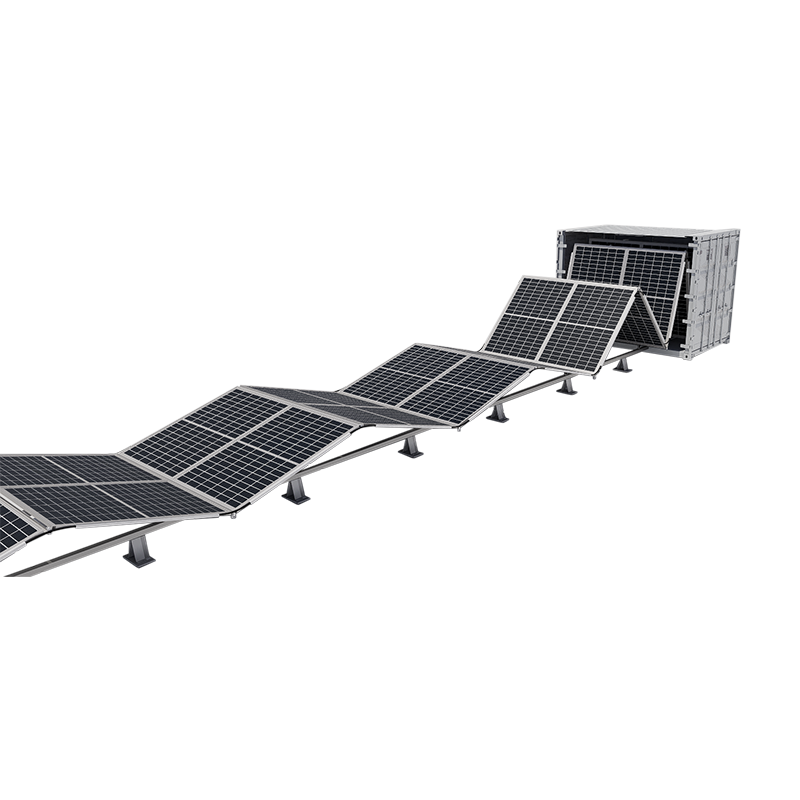
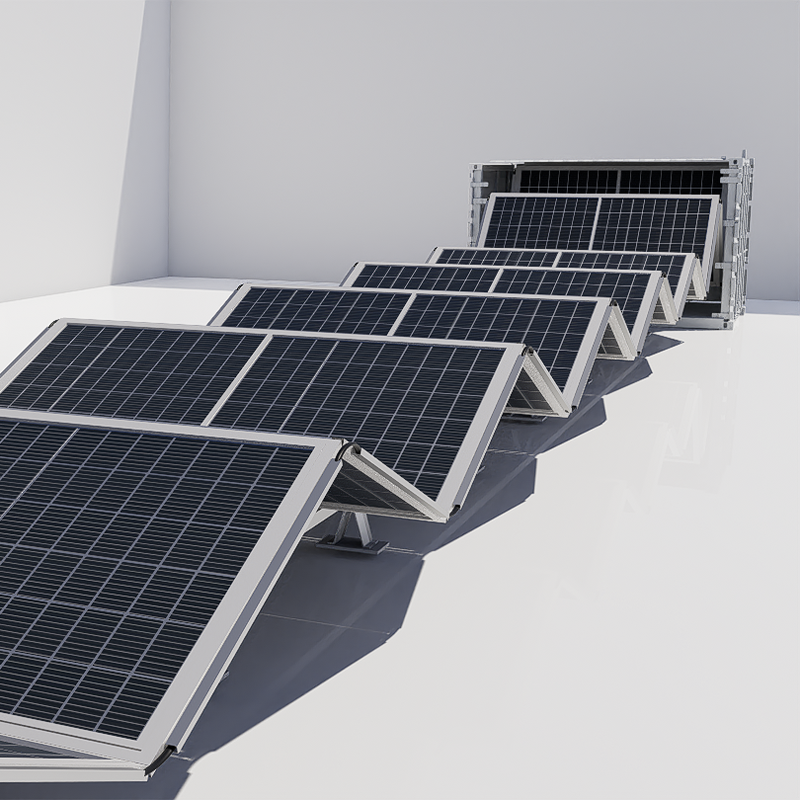 Compact Modular Solar Container System with 24kW CapacityThis compact 08GP container delivers 24kW of pre-wired solar power with foldable arrays, deployable within a day. Its modular design allows parallel expansion, making it ideal for remote bases, telecom stations, and construction sites with limited space.View Product →
Buying a battery energy storage system container substation is an exercise in scoping, not guessing. Start with the load profile and the applicable grid code, translate those requirements into power, energy, and voltage numbers, and then compare integrated configurations from suppliers with proven container-level engineering. The container substation will not eliminate every project delay, but it removes the construction, testing, and coordination risks that traditionally sit between the battery and the grid.
You May Also Like
Copyright © Ampora Technology Co., Ltd. All Rights Reserved.
Mobile Solar Container Manufacturers Solar Power Container Solution