

 English
 русский
 عربى
عربى 14/09/2026 Industry
10 ft Shipping Container Dimensions: Full Exterior, Interior & Weight Guide
Content
When the equipment spec for a new solar power room called for a 20 ft container, the survey crew stopped the order. The only available compound space was a narrow strip beside the old generator shed, with the access road running along one side. A 6 m box would have blocked it completely; a 10 ft unit left enough room for vehicles to pass. That small difference is why the 10 ft shipping container keeps appearing in project plans.
The practical point of knowing the 10 ft shipping container dimensions is exactly this: the box is small enough to solve site problems that a 20 ft unit cannot. A typical unit measures about 3.02 m long, 2.44 m wide and 2.59 m high externally, or nominally 10 ft by 8 ft by 8 ft 6 in. Inside, you normally get roughly 2.83–2.98 m of length, 2.33–2.35 m of width and about 2.35 m of headroom. It is the smallest steel container produced in any real volume, and its compact footprint is the whole point.
10 ft Shipping Container Dimensions at a Glance
The first thing buyers notice is that the 10 ft box has no single universal specification. Because 10 ft units are produced in smaller numbers than 20 ft and 40 ft boxes, they are built to less uniform drawings. External width and height stay close to 2.44 m and 2.59 m because the corner castings must engage standard twistlocks, but the interior length can vary by more than 100 mm between suppliers. Use the table below as a planning baseline, not as a guaranteed standard.
| Parameter | Typical value |
|---|---|
| External length | 2,991–3,020 mm (9 ft 9.75 in – 9 ft 11 in) |
| External width | 2,438 mm (8 ft) |
| External height | 2,591 mm (8 ft 6 in) |
| Interior length | 2,831–2,980 mm (9 ft 3 in – 9 ft 9 in) |
| Interior width | 2,330–2,350 mm (about 7 ft 8 in) |
| Interior height | 2,350–2,393 mm (7 ft 8 in – 7 ft 10 in) |
| Door opening width | about 2,340 mm (7 ft 8 in) |
| Door opening height | about 2,270–2,280 mm (7 ft 5 in – 7 ft 6 in) |
| Usable floor area | 6.6–7.0 m² (about 71–75 sq ft) |
| Interior volume | about 15–17 m³ |
| Tare weight | 1,250–1,400 kg (2,750–3,100 lb) |
| Max gross weight | 10,000–15,000 kg, set by the builder rating |
For planning purposes, interior length is the number that surprises people. A 2.83 m internal length is common on welded units with thicker wall liners; a 2.98 m length appears on newer designs. Measure the inside before you detail wall-mounted racks or a floor layout. High-cube 10 ft versions exist at 9 ft 6 in external height, but they are rare and usually made for telecom or equipment shelters.
10 ft vs 20 ft: When a Short Box Is the Right Call
The 10 ft container is not merely half of a 20 ft container; it is a different category of enclosure. Its interior volume of about 15–17 m³ compares with roughly 33 m³ for a 20 ft unit. What it saves you is site area, transport hassle, and the cost of heating, cooling or securing space you do not need.
| Parameter | 10 ft | 20 ft |
|---|---|---|
| Exterior length | about 3.0 m | about 6.1 m |
| Floor area | about 7 m² | about 14 m² |
| Typical roles | equipment room, power station housing, security booth | site office, cargo transport, workshop |
| Delivery footprint | compact; fits tight sites | needs a longer laydown area |
| Lifting requirement | small crane or Hiab | larger crane or heavy forklift |
| Cooling and heating load | small | roughly double |
The rule of thumb: choose the 10 ft unit when the site limits the footprint, or when you need several isolated rooms rather than one open space. Choose a 20 ft unit when you need palletized cargo capacity or an office and store combined in a single footprint.
What Actually Fits Inside a 10 ft Container
The interior is long enough to stand in, walk around in, and work on one piece of equipment at a time. It is not designed for forklift loading of full pallet rows, but it suits fixed installations very well.
- One standard 1,200 × 1,000 mm pallet with room to walk around it, or two smaller pallets placed end to end along the length.
- A two-person site office with a desk, a storage locker and a small air-conditioning unit.
- An electrical or telecom room with two 19-inch equipment racks, a battery bank and a distribution board.
- A sound-attenuated generator enclosure, one of the most common reasons a 10 ft container is ordered on energy projects.
- A security checkpoint or ticket booth with a sliding window, heating and a small safe.
If the task is to give a single machine — a pump, a switchboard, a compressor — a weather-tight maintenance position, the 10 ft box provides just enough depth to work in front of the equipment without forcing you to heat or secure a much larger volume. In that sense, its limitation is also its value.
From Storage Box to Off-Grid Power Station
The most active use for 10 ft containers today is energy infrastructure. Telecom projects established the pattern: a small steel enclosure that shelters sensitive equipment from heat, dust and rain. Solar power follows the same logic. Photovoltaic panels go outside, while inverters, battery racks and control systems live in a sealed, conditioned room inside the container.
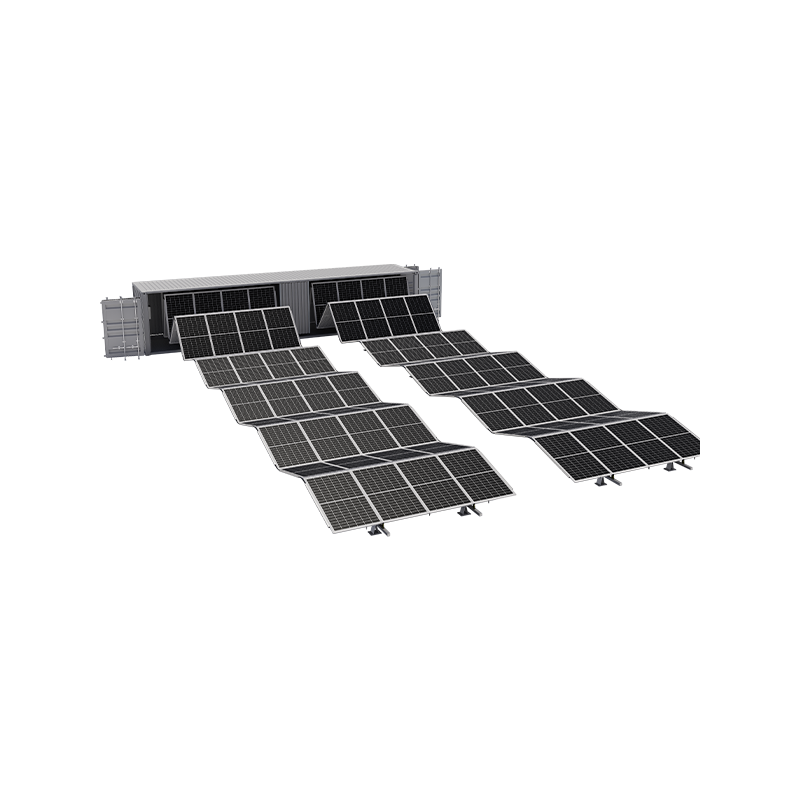
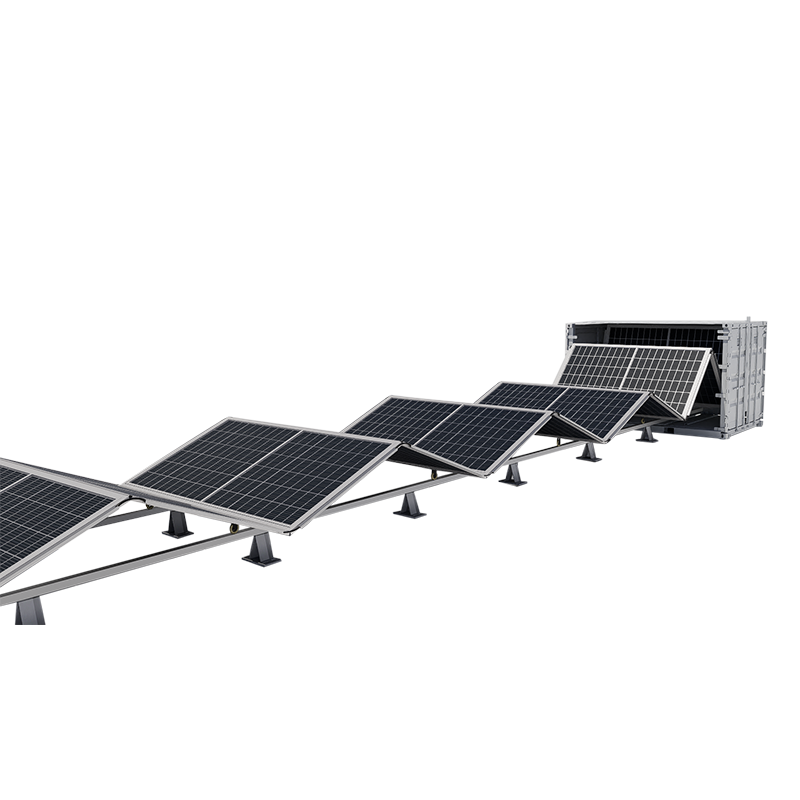
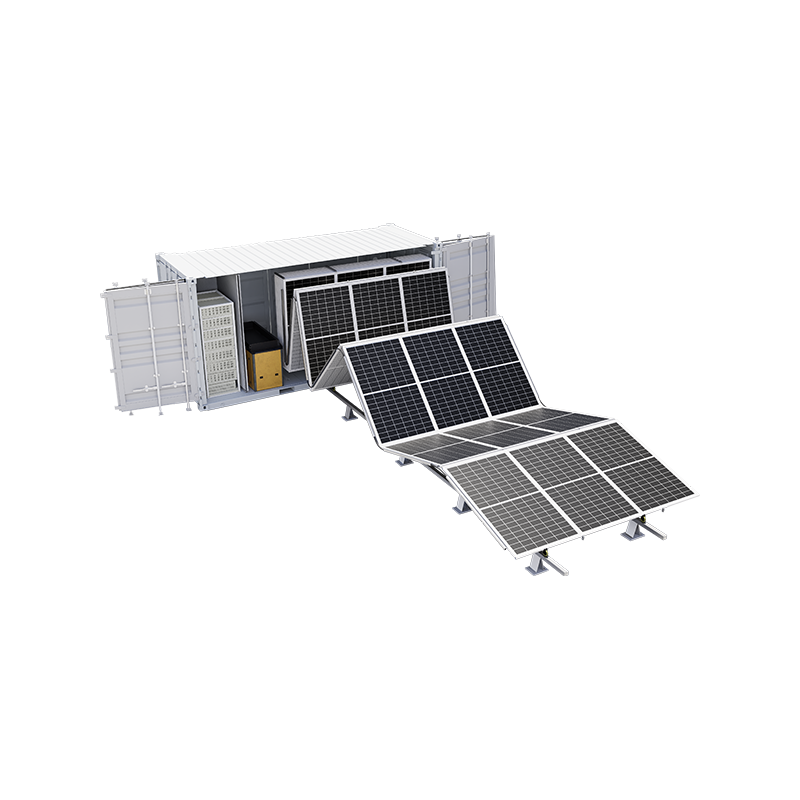
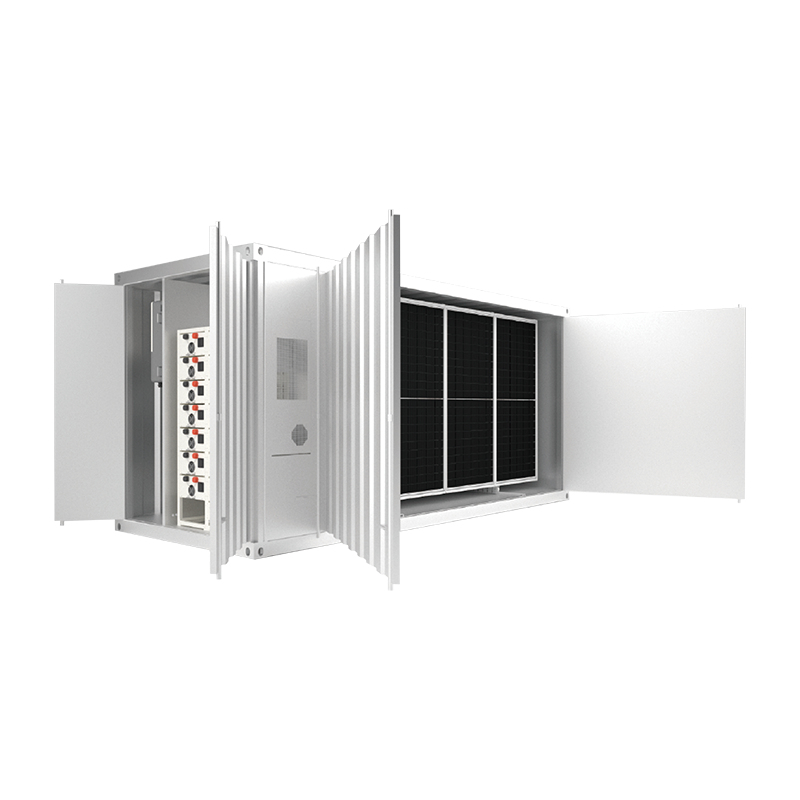
For construction camps, mining exploration bases and emergency response depots, the 10 ft unit is large enough to hold a complete small-scale solar and battery system, yet small enough to move on a flatbed and lift into position with modest craneage. Suppliers now sell this as a packaged product. A portable and scalable photovoltaic and battery storage container arrives with battery strings, inverters and monitoring gear already fitted; the site team installs the external solar array and connects it to the interface panel. Output depends on battery chemistry and the panel array, but the footprint stays within the standard 10 ft width and roughly 3 m length.
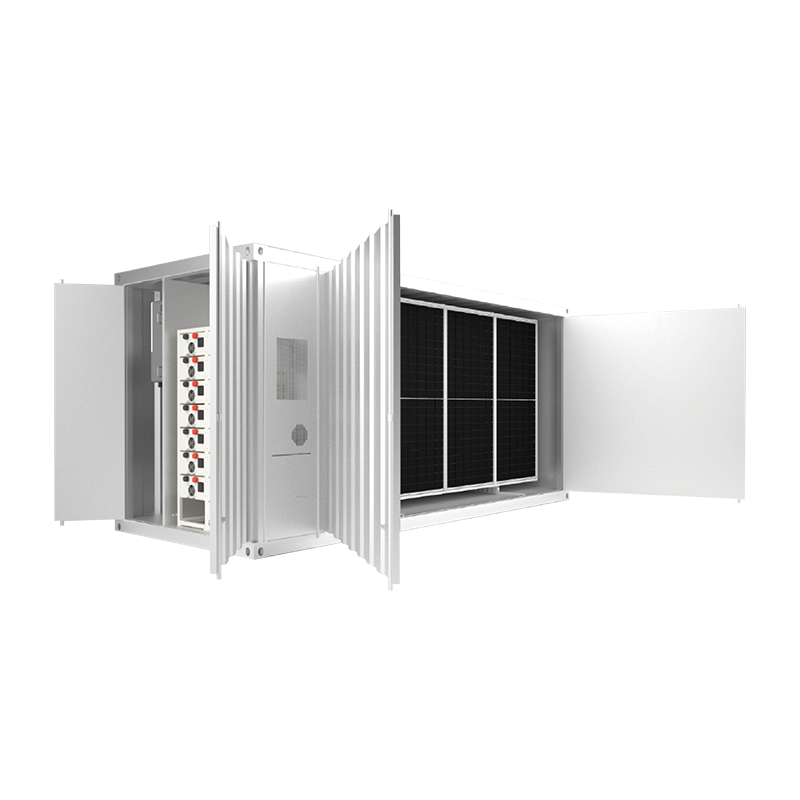 Portable and Scalable PV & ESS Container for Remote SitesThis pre-engineered 10-foot containerized solar and battery system suits construction camps and emergency bases, with integrated electrical and thermal design reducing on-site retrofitting costs and simplifying deployment.View Product →
Manufacturers that build this equipment as a production line, for example Ampora Technology Co., Ltd., integrate the electrical design, thermal management and lifting points into the container itself. That matters for a 10 ft box, because retrofitting a used container with battery racks and high-current cabling can cost more in labour than the box itself.
When Solar Alone Is Not Enough
A solar-only container has limits. Cloud cover, dust, night loads and seasonal sun angles reduce generation, and a refrigeration or pumping load can exceed what the battery bank supplies in poor weather. The conventional engineering answer is a hybrid arrangement: photovoltaic input, a battery bank and a diesel generator share one enclosure, with an automatic transfer switch deciding which source feeds the site.
That arrangement changes the layout of the 10 ft box. The generator needs intake and exhaust louvres, fire-rated partitions and extra service clearance; the battery bank needs temperature control; the switchgear needs accessible front panels. These requirements are why all-in-one configurations have become a distinct product category.
An all-in-one PV-battery-diesel container combines the three power sources in one enclosure with electrical interfaces pre-wired. In the field, that reduces deployment to a single transport unit, a flatbed crane and a few external cable connections. It is a practical answer when a project lacks the budget or manpower to assemble separate generator, battery and solar rooms on site.
What to Check Before You Buy or Specify One
Buying a 10 ft container for a fixed installation is a different task from buying one for cargo. The structure matters, but the preparation details decide whether the project runs smoothly.
- Confirm the CSC plate for tare weight, max gross weight and production date. A unit built for telecom or energy duty may already have thermal lining and extra ventilation.
- Verify the actual interior length against the drawings. The difference between 2.83 m and 2.98 m can decide whether a standard equipment rack fits.
- Check the door configuration. Single doors at one end are normal; double doors help when you need to slide gear in from the side on a narrow site.
- Inspect floor plywood, corner posts, roof dents and door gaskets. A one-trip unit costs more but saves retrofit labour.
- Plan modifications before painting or insulation: cable glands, ventilation louvres, air-conditioner cut-outs and wall-mount rails all affect the structural guarantee.
- Confirm delivery geometry. An empty 10 ft box weighs roughly 1,250–1,400 kg, so a Hiab truck can usually place it, but the approach path still needs width for an 8 ft box plus lifting clearance.
When the scope goes beyond simple openings — custom panel layouts, integrated switchgear, non-standard door positions — a supplier with a dedicated customization line is easier to work with than a general fabricator.
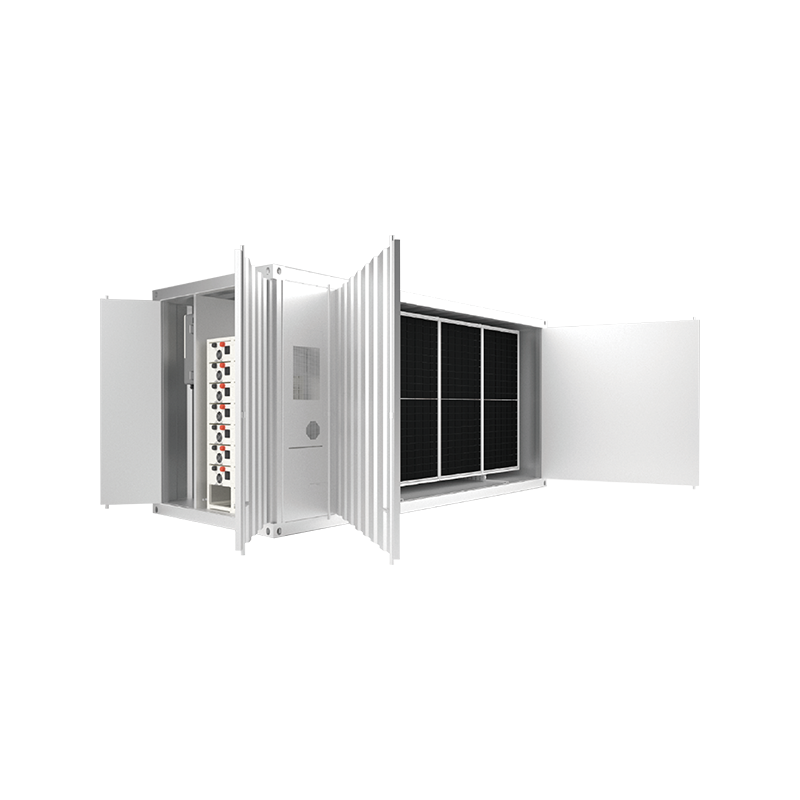 Customized Containerized Power SolutionFor projects needing non-standard layouts or special interfaces, this supplier offers dedicated customization covering output ratings, dimensions, monitoring, and site-specific adaptations, with a structured installation process.View Product →
If you are deciding whether containerized power makes sense for your site, the market direction is clear: the move toward mobile containerized PV as a mainstream power format is driven by the same constraints that make the 10 ft footprint attractive. The dimensions allow a genuine power room to sit in the space of a parking bay.
None of this makes the 10 ft container a replacement for a 20 ft or 40 ft unit. It is a different tool. When you need to house a few cubic metres of equipment, fit into a leftover strip of ground, or deliver a power station to a site where heavy machinery cannot travel, the 10 ft box is often the cheapest enclosure that will do the job. Confirm the CSC plate, measure the interior and base the decision on the delivered specification rather than the nominal size. The dimensions are modest; the range of applications is not.
You May Also Like
Copyright © Ampora Technology Co., Ltd. All Rights Reserved.
Mobile Solar Container Manufacturers Solar Power Container Solution