

 English
 русский
 عربى
عربى 27/08/2026 Industry
Why is mobile containerized PV set to become the next billion-dollar market?
Imagine a scene: an earthquake has destroyed the power grid, and rescue teams need to light up operating tables immediately. Or, a geological survey team ventures deep into an uninhabited area, where every piece of equipment requires a stable power supply. In the past, the answer might have been a roaring diesel generator — noisy, polluting, and dependent on fuel resupply. Today, a better solution is emerging: mobile containerized PV. This is not a distant concept, but a billion-dollar sector that is rapidly taking off.
I.How Big Is the Market? Two Data Sets Tell the Story
1. Narrow-Scope Data (QYResearch)
According to QYResearch, the global "mobile solar power station" market was valued at approximately USD 602 million in 2025 and is projected to grow to USD 1.098 billion by 2032, representing a compound annual growth rate (CAGR) of 9.1%.
2. Broad-Scope Data (GEP Research)
GEP Research adopts a broader statistical scope, covering "mobile platform PV power generation systems." In 2025, the global market size surpassed USD 28.74 billion, up 34.6% year-on-year, and is expected to reach USD 72.48 billion by 2030. The Asia-Pacific region led with a 43.2% installation share, while China accounted for 34.3% of the global market with USD 9.86 billion, growing at an impressive rate of 41.2%.
(Note: The data discrepancy stems from different statistical scopes — the former focuses on complete "mobile solar power stations," while the latter covers a broader range including vehicle-mounted, portable, and drone-integrated PV modules. However, both point to the same conclusion: rapid growth.)
According to GEP Research, global new installations of mobile PV power generation systems reached 19.8 GW in 2025, with China contributing 8.4 GW. Regardless of the statistical methodology, mobile PV clearly demonstrates the characteristics of a high-growth sector.
II. Triple Positioning: Deployable, Emergency, Backup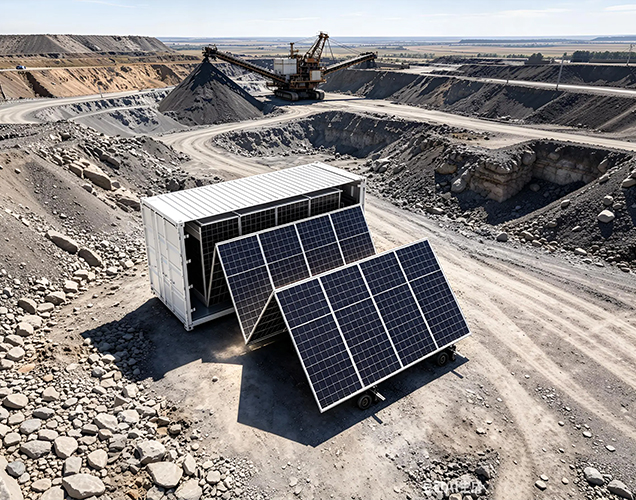
Mobile PV is more than just "movable solar panels" — it plays three critical roles:
1. Deployable Power
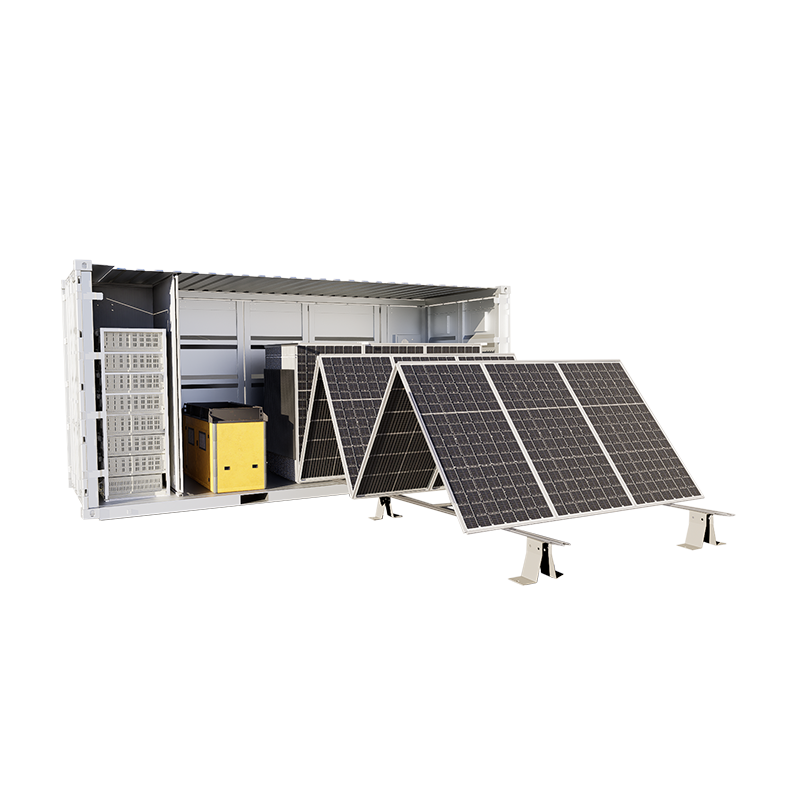
Rapid deployment is its core advantage. Traditional fixed power stations often take months or even years from survey to grid connection, while mobile PV systems are factory pre-assembled and ready for plug-and-play use upon arrival. Deployment efficiency is improved by over 70%. For example, a containerized PV-storage system (such as Ampora's 20HQ model) is integrated into a standard container, equipped with 184 Topcon modules, and can be put into operation with simple wiring upon delivery, delivering a total power output of up to 120kW.
2. Emergency Power
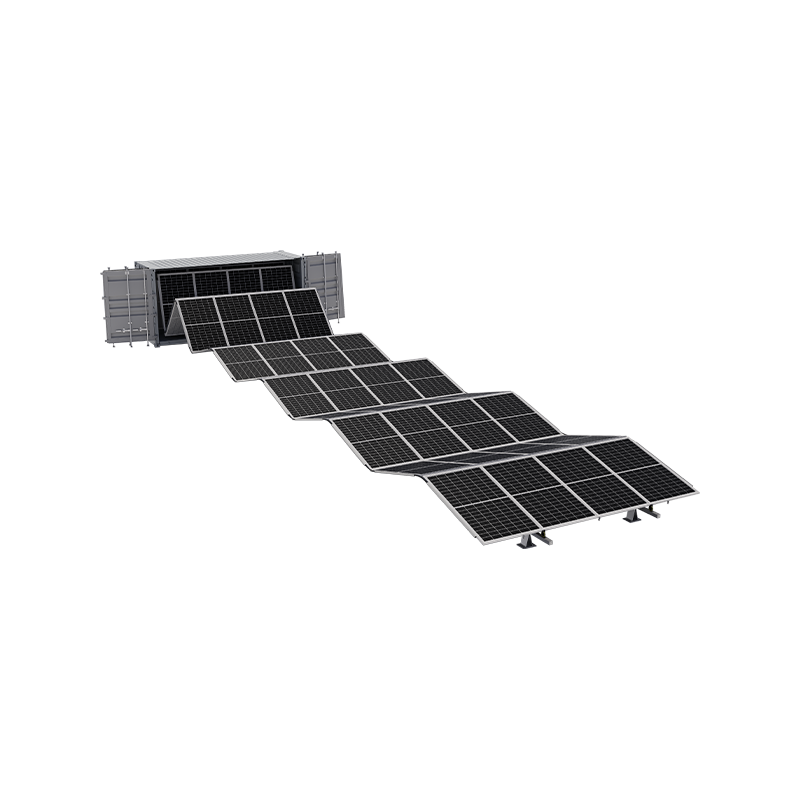
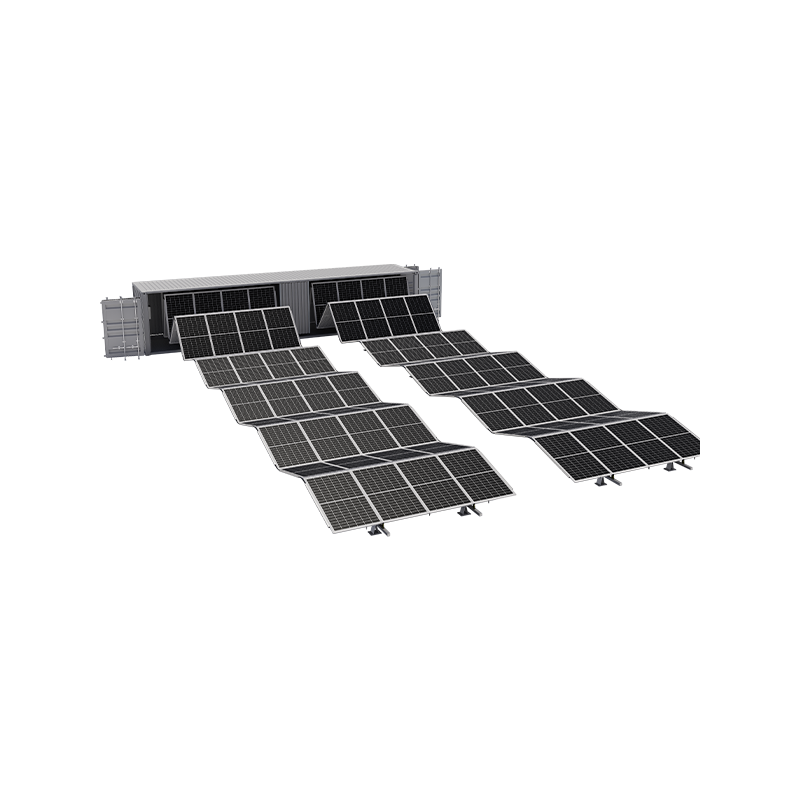
When earthquakes, floods, typhoons, or other disasters cut off the power grid, mobile PV can be rapidly deployed to disaster areas. It can be customized in the 10–300kW range, featuring automatic mobility and automatic unfolding and folding of PV panels. It can work in coordination with lithium battery emergency power vehicles to provide continuous clean electricity for temporary shelters and emergency command centers.
3. Backup Power
In temporary power scenarios such as mining sites, oil fields, and construction sites, mobile PV can replace traditional diesel generators, delivering zero-carbon, silent, and low-cost power supply.
Why "Now"?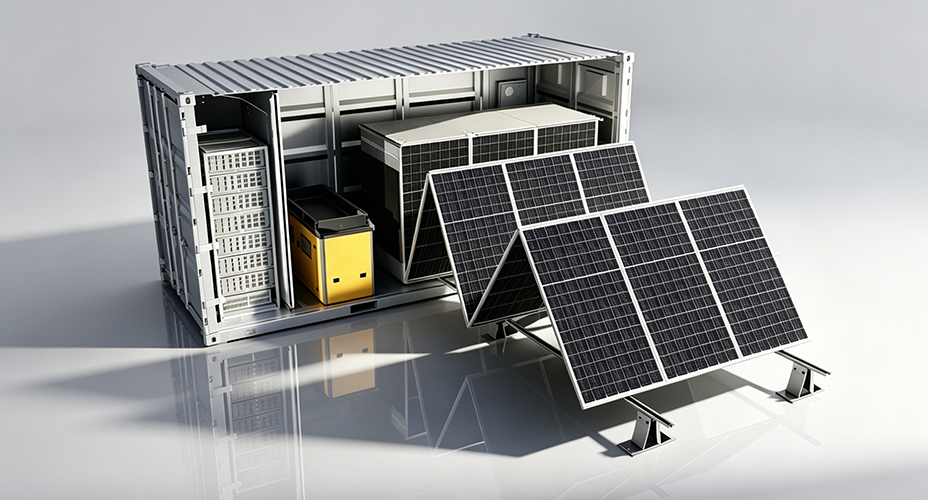
The surge in mobile PV is no accident. It is driven by three key forces:
1. Policy Support
As of Q1 2026, over 40 countries and regions worldwide have introduced special subsidies or tax incentives for mobile renewable energy equipment. China's Ministry of Industry and Information Technology, in its Action Plan for High-Quality Development of the PV Industry (2025–2027), has included mobile PV in the national key support catalog for the first time.
2. Cost Reduction
The price per watt of flexible modules has dropped by approximately 18% compared to three years ago, further lowering the barrier to commercial adoption. The average system conversion efficiency has surpassed 24.7%, an increase of nearly 3 percentage points since 2023.
3. Surge in Demand
Emergency response and rescue operations accounted for approximately 37% of demand, reaching USD 1.75 billion in 2025. The outdoor recreation sector, fueled by over 120 million global campers, has also shown remarkable growth.
Mobile PV is now transitioning from a "supplemental energy source" to a "mainstream off-grid power solution." At its core, this represents the "de-infrastructuralization" of solar power generation — bringing photovoltaic electricity from fixed power stations to any location where power is needed.
According to combined institutional forecasts, even under the most conservative estimates, the mobile PV market will maintain double-digit compound annual growth over the next 5 to 8 years. Leveraging its manufacturing supply chain advantages and early policy dividends, the Chinese market is well-positioned to continue leading the global share.
You May Also Like
Copyright © Ampora Technology Co., Ltd. All Rights Reserved.
Mobile Solar Container Manufacturers Solar Power Container Solution