

 English
 русский
 عربى
23/11/2026 Industry
Powering a Hydroponic Farm Container With an Integrated Containerized Solar Power System
Content
A 40-foot container farm on eight vertical tiers usually carries about 6 kW of LED lighting, a 0.6 kW circulation pump loop, a 3.5 kW cooling unit and a small controls load. Add that up over 24 hours and the box needs roughly 165–175 kWh a day. Put the same container on a leased lot, a mine camp, a resort island or farmland far from a 400 V feeder, and that daily energy figure — not the number of growing tiers — decides whether the farm runs at all. Treat the hydroponic farm container as an off-grid power project first, and specify the Integrated Containerized Solar Power Generation System around its worst week rather than its best one.
Why the Power Budget Decides the Grow Plan
Lighting and cooling are the two heaviest loads in a container farm, and both of them push heat into a sealed steel box. That coupling is the part most grow plans miss: you cannot size the lamps in one conversation and the power supply in another. When cooling trips, canopy temperature climbs within minutes and leafy crops show the stress the same day, long before a nutrient imbalance would ever appear.
The numbers below are a typical 40-foot layout used as a sizing starting point. Yours will move with crop, climate and photoperiod, but the shape of the profile stays the same.
| Load | Typical draw | Duty cycle | Daily energy |
|---|---|---|---|
| LED grow lighting | 6.0 kW | 16 h per day | 96 kWh |
| Cooling and dehumidification | 3.5 kW | about 60% | 50 kWh |
| Nutrient and circulation pumps | 0.6 kW | 24 h per day | 14 kWh |
| Dosing, sensors, controls | 0.3 kW | 24 h per day | 7 kWh |
| Design total | — | — | about 167 kWh per day |
Notice where the energy actually sits. Lighting and cooling together account for close to 90% of demand, which means a modest change to the photoperiod or the setpoint does more for your array size than swapping pump brands ever will.
Sizing the Solar Container Around Peak Sun Hours and Night Loads
Start from daily kWh, not peak kW
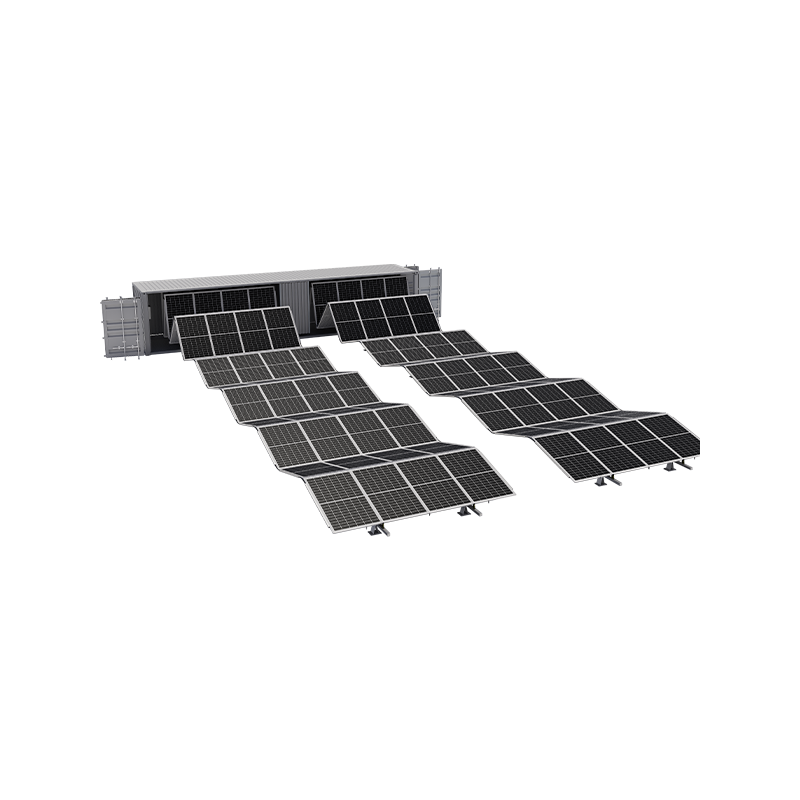
Divide 167 kWh by 4.5 peak sun hours and a realistic 0.75 system derate that covers dust, wiring losses, high cell temperature and inverter efficiency, and you land near 50 kWp of PV. That is the number that sets the physical footprint, not the 12 kW of instantaneous load someone might quote from a nameplate. A 20-foot container with roof-mounted modules rarely exceeds 8–10 kWp, so anything above roughly 60 kWh a day pushes you toward a 40-foot body, a slide-out rack array, or a separate ground mount.
Size the battery for the dark stretch
If the lighting schedule runs at night, almost the entire daily load has to pass through the battery bank; if lights run during daylight, the battery only has to carry pumps, controls and cooling through the evening. Work the second case and you need roughly 21 kWh of usable energy overnight, which becomes about 30 kWh of nominal capacity once you allow 80% depth of discharge and 90% round-trip efficiency. Then add margin: two consecutive overcast days is the usual design assumption for food production, and doubling autonomy roughly doubles battery cost, so most projects sit between one and two days and accept a generator for the rest.
Because that requirement moves with every site, a scalable architecture matters more than any single capacity figure. The integrated containerized solar power generation system range is built around exactly that idea, letting battery and PV capacity be added in modules instead of replaced wholesale.
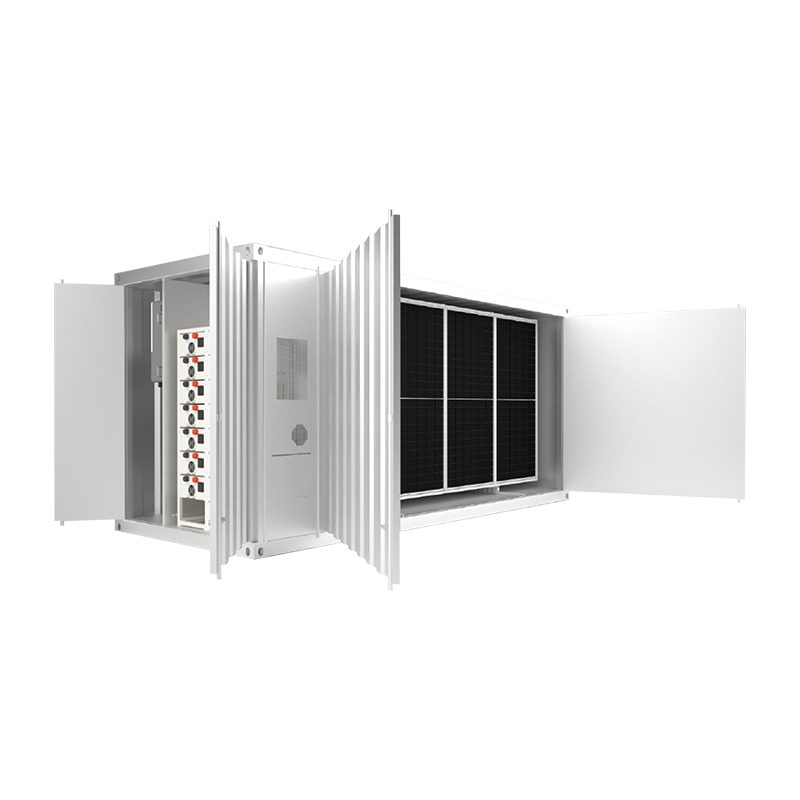 MP20HQ-110KW/241KWH Scalable PV and Storage ContainerModular 20HQ container combines 110 kWp PV with 241 kWh storage and is factory-tested, supporting added capacity for expanding container farms.View Product →
For a container farm, the practical test is simple: can the power block grow by 30% when you add a fourth tier of racks, without a new foundation, a new crane lift or a new grid application?
When Solar and Batteries Are Not Enough: Adding a Genset to the Same Skid
Winter sun, monsoon weeks and dust seasons break the neat math. A site with 4.5 peak sun hours in July may see 2.2 in December, and no reasonable array covers that gap without an enormous battery. This is where hybrid architecture earns its place: PV as the primary source, a battery bank for load smoothing and night operation, and a diesel generator sized at maybe 40–60% of peak load to cover the deficit and recharge the bank.
The design details that matter are unglamorous. Automatic transfer switching should complete inside the ride-through window of your controllers and pumps, usually under 10–15 seconds, so the crop never notices. Generator sizing should avoid long low-load running, which glazes cylinders and wastes fuel; a 30 kW set running at 25% load burns more per kWh than one running at 60%. Fuel logistics also need a home in the layout — a 100 L tank at 5 L per hour gives you 20 hours, which is not a week. Enclosure ventilation, exhaust routing away from the air intake of the cooling unit, and acoustic treatment inside a camp are all easier to solve at the factory than at 2 a.m. on site.
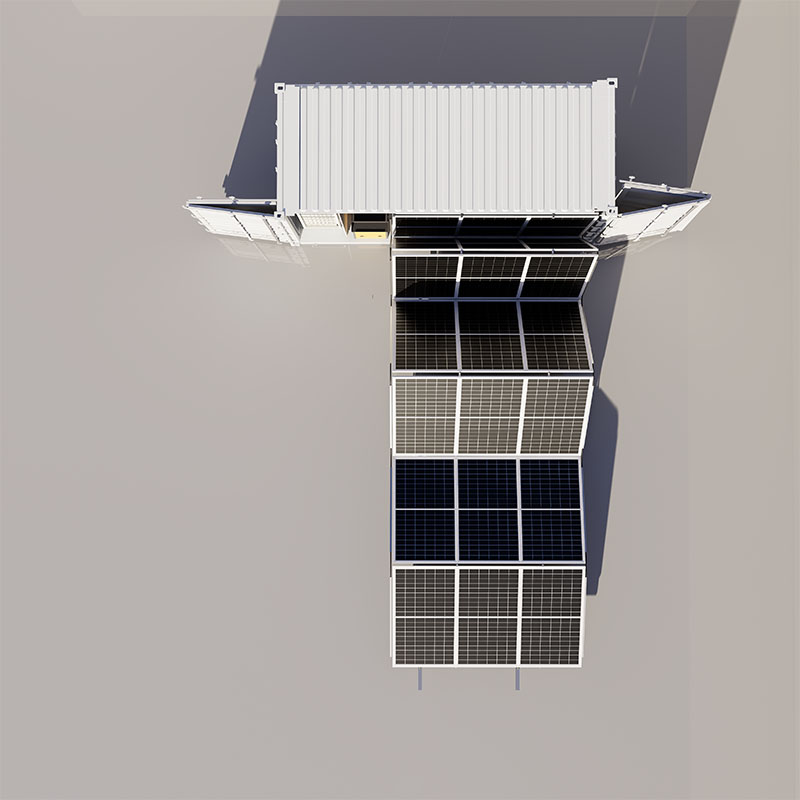 MP20HQ-78KW/128KWH Hybrid Solar Container with Diesel BackupFactory-integrated 78 kWp PV, 128 kWh battery and 75 kVA diesel generator coordinate via EMS for continuous off-grid power in cloudy seasons or critical loads.View Product →
The honest recommendation: choose hybrid when the site has a real cold or cloudy season, when the load includes a cold room or a processing line, or when crop failure costs more than the generator ever will. Choose PV plus storage alone when the climate is reliable and the crop can tolerate a lighting reduction of a few hours during a bad stretch.
Siting, Heat Rejection and Transport Practicalities
Container farms and solar containers are both steel boxes, and both fail in the same places: shade, airflow and access. Before the power design is frozen, walk the site against this list.
- Footprint and access: a 40 ft high-cube body measures roughly 12.19 m by 2.44 m, and a crane or reach stacker needs clear approach on at least one long side plus room to swing.
- Shade study: roof-mounted modules sit below any nearby tree line, mast or neighbouring container. A 9 a.m. shadow on 15% of the array can cost more output than a week of cloud.
- Heat rejection: cooling units need 1.5–2 m of clear discharge space. Recirculating hot air between two containers can lift condensing temperature enough to trip high-pressure cutouts by mid-afternoon.
- Ambient derating: inverters and batteries lose capacity above 40 °C. In hot climates, shade structures and forced ventilation on the power compartment are not extras.
- Corrosion class: coastal sites call for C4 or C5 paint systems and stainless fasteners, plus a washdown schedule no one will follow unless it is written into the service contract.
- Wind and anchoring: cyclone-prone regions require certified tie-downs and ballast calculations, and those loads travel through the same frame as your PV rails.
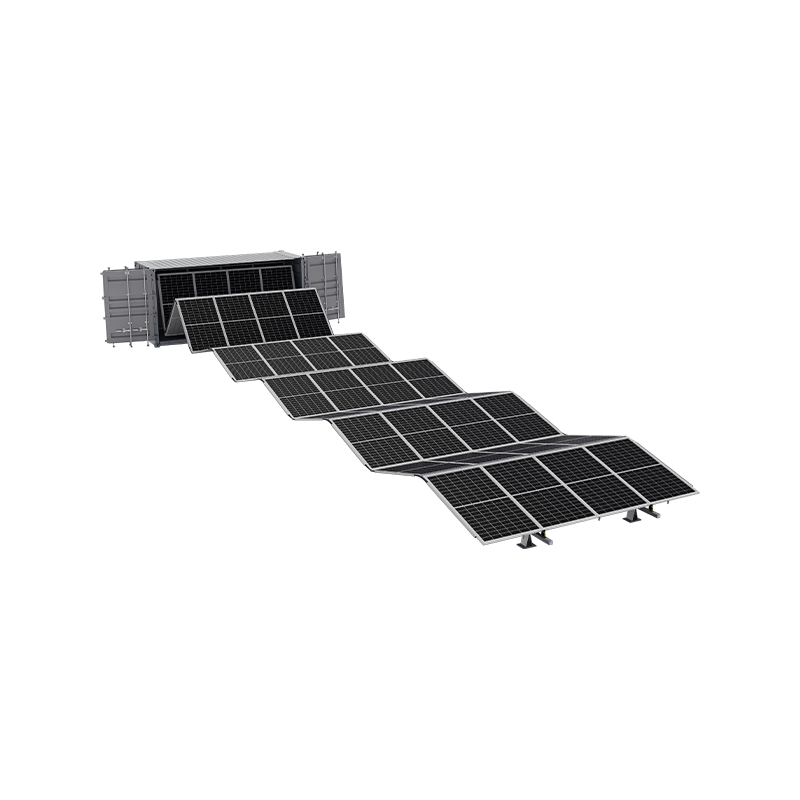
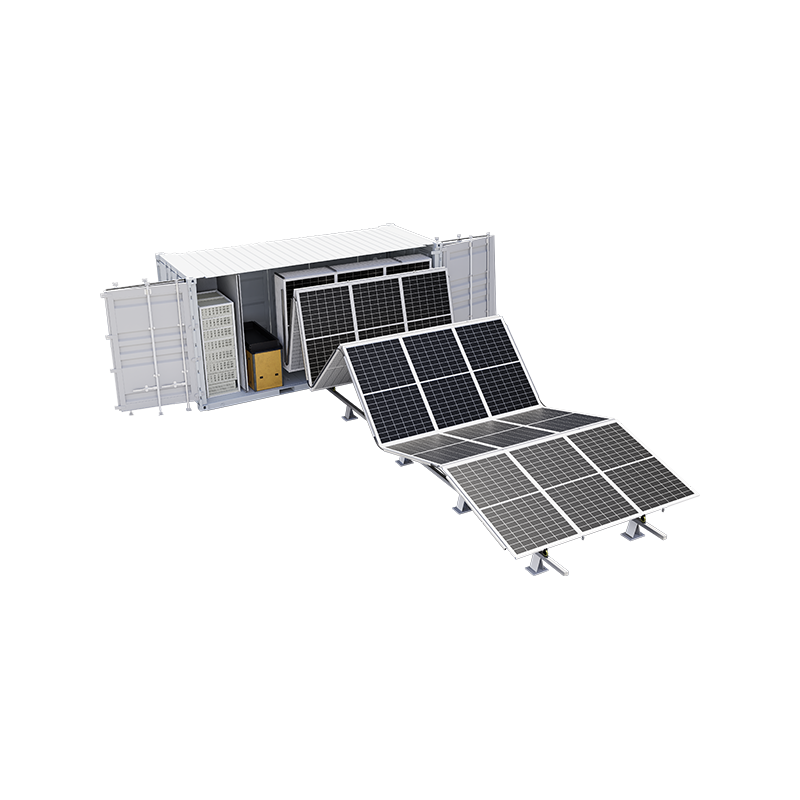
Where site access is tight or the deployment is temporary — a lease that runs two seasons, a camp that relocates — a self-contained unit that arrives pre-wired and pre-commissioned removes most of the installation risk. The MP20HQ-120KW convenient configuration exists for precisely that profile: transport, set, connect the load.
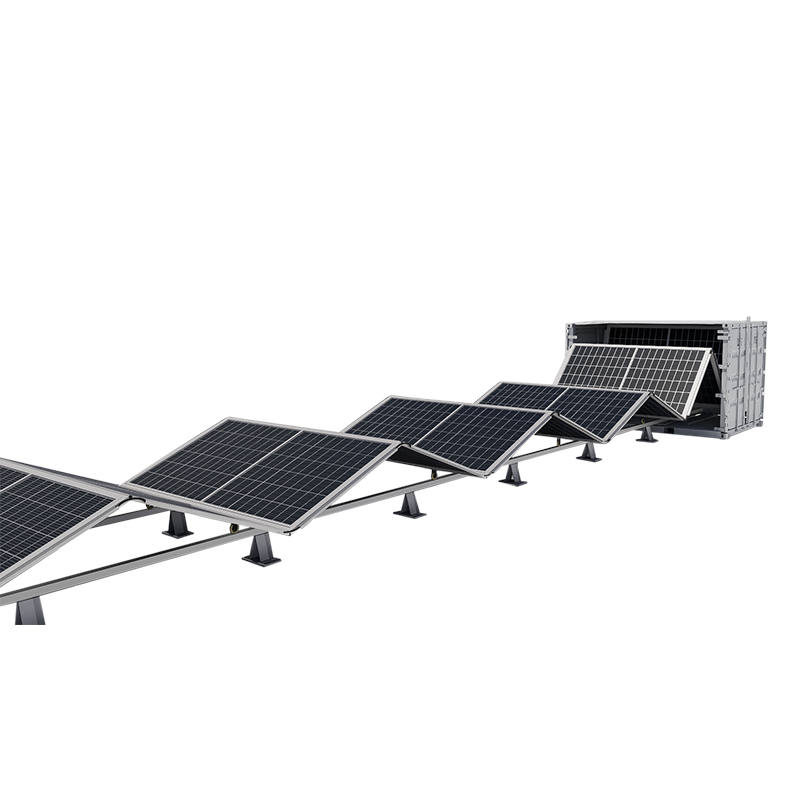
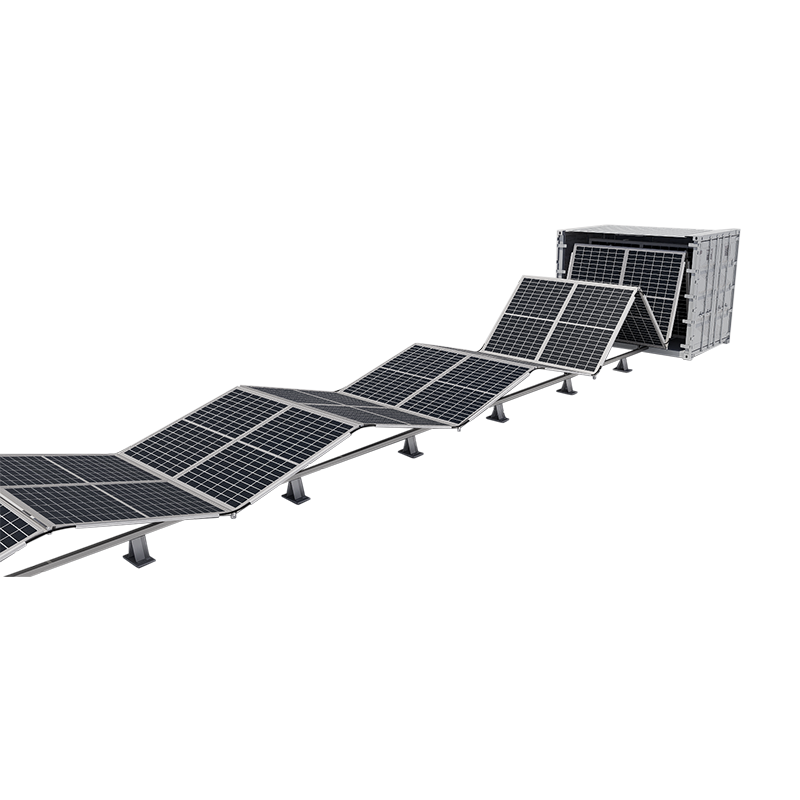
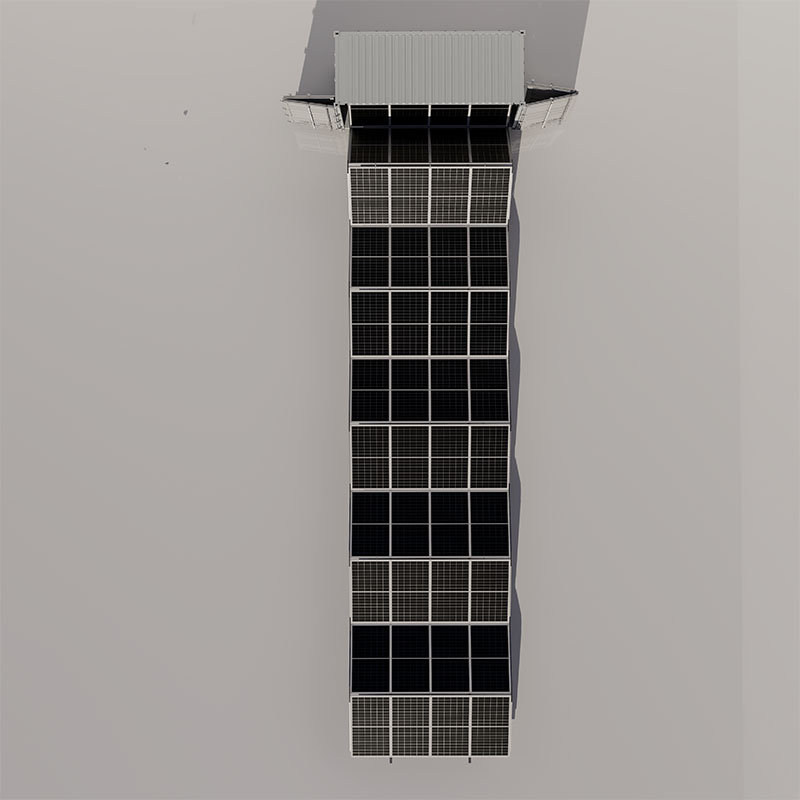 MP20HQ-120KW Plug-and-Play Containerized Solar SystemPre-wired 20HQ container with 184 Topcon panels and 120 kW output deploys without civil works, suited to temporary or access-constrained field sites.View Product →
A Procurement Checklist Worth Printing
Most cost overruns in this category come from an incomplete load schedule rather than from hardware quality. Ask for these items in writing before comparing prices.
- A measured or fully itemised load audit, including inrush current for compressors and pump starts.
- A single-line diagram showing PV, battery, inverter, transfer switch and generator, with protection ratings stated.
- Battery chemistry, usable capacity and a cycle-life warranty expressed in years at a stated depth of discharge, not just ampere-hours.
- Cooling load included in the power budget, with the setpoint range the system will actually hold at the site's design ambient temperature.
- Remote monitoring with alerts on state of charge, generator run hours and fault codes — container farms are rarely visited daily.
- Commissioning test data at site: measured array output, autonomy test under real load, and transfer time during a simulated outage.
- Spare parts list and lead times for controllers, fuses, contactors and the cooling unit's main wearing parts.
- Delivery terms, lifting plan and the party responsible for foundation or ballast.
It is also worth tracking how the equipment side of this market is maturing, since module pricing and container integration costs have both moved quickly; this overview of mobile containerized PV as a mainstream project option is a reasonable background read before you set a budget.
Get the daily kWh right, size the array against the worst sun week rather than the annual average, and decide early whether a generator belongs on the same skid. Everything else — module brand, rack layout, container colour — is negotiable. The power budget is not. A hydroponic farm container that never loses cooling, never browns out a pump mid-cycle and never strands a harvest is a power project that happened to be specified by a grower, and it is worth planning in that order.
You May Also Like
Copyright © Ampora Technology Co., Ltd. All Rights Reserved.
Mobile Solar Container Manufacturers Solar Power Container Solution