

 English
 русский
 عربى
12/11/2026 Industry
ESS Container Guide: Integrated Containerized Solar Power Generation System
Content
- 1 What an ESS container actually solves on site
- 2 Why an Integrated Containerized Solar Power Generation System changes the brief
- 3 Sizing an ESS container around load, solar yield, and diesel backup
- 4 Portable and scalable PV-ESS containers: when flexibility matters
- 5 PV-BESS-DG all-in-one containers: where diesel stays in the design
- 6 Site checks before you approve the layout
- 7 Delivery, commissioning, and handover risks
- 8 A practical selection sequence
An ESS container is not a generic shipping box filled with batteries. On a remote site, it is the piece of infrastructure that decides whether the solar array, the battery bank, and the backup generator behave as one power plant or three expensive parts. The practical starting point is not the megawatt-hour rating. It is the load profile, the solar yield in the worst month, and the access your technicians will have at 2 a.m. in bad weather.
What an ESS container actually solves on site
A containerized energy storage system packages battery racks, a battery management system, power conversion, thermal control, fire detection, and the control interface inside a transportable enclosure. An integrated solar version adds the PV interface, MPPT or DC coupling, and often the AC distribution that lets solar, storage, and loads share a common bus. That integration matters because the same nominal storage capacity can perform very differently when the thermal design, auxiliary loads, and control logic are poorly matched.
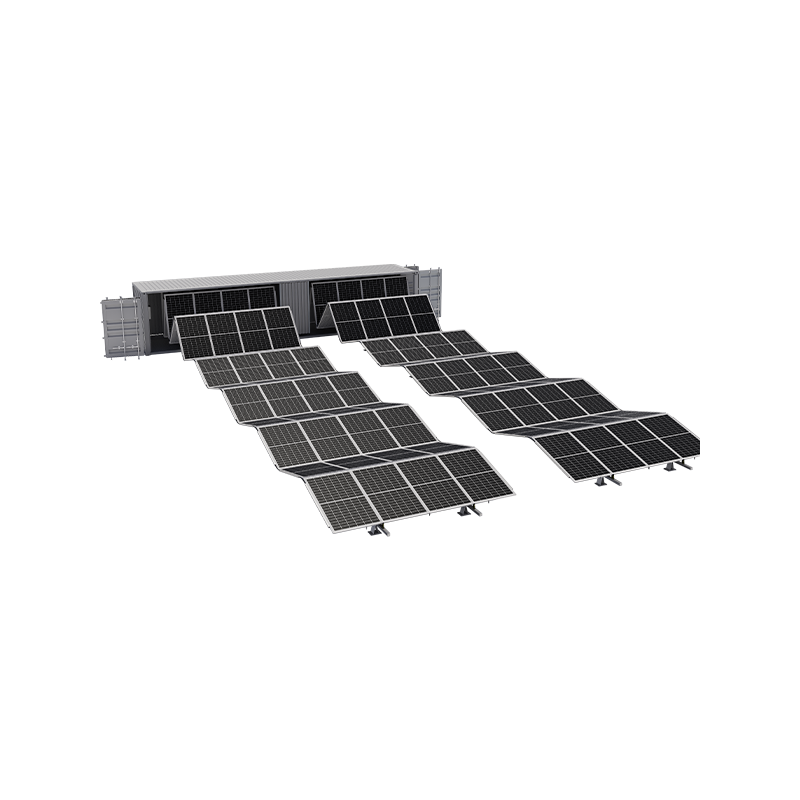
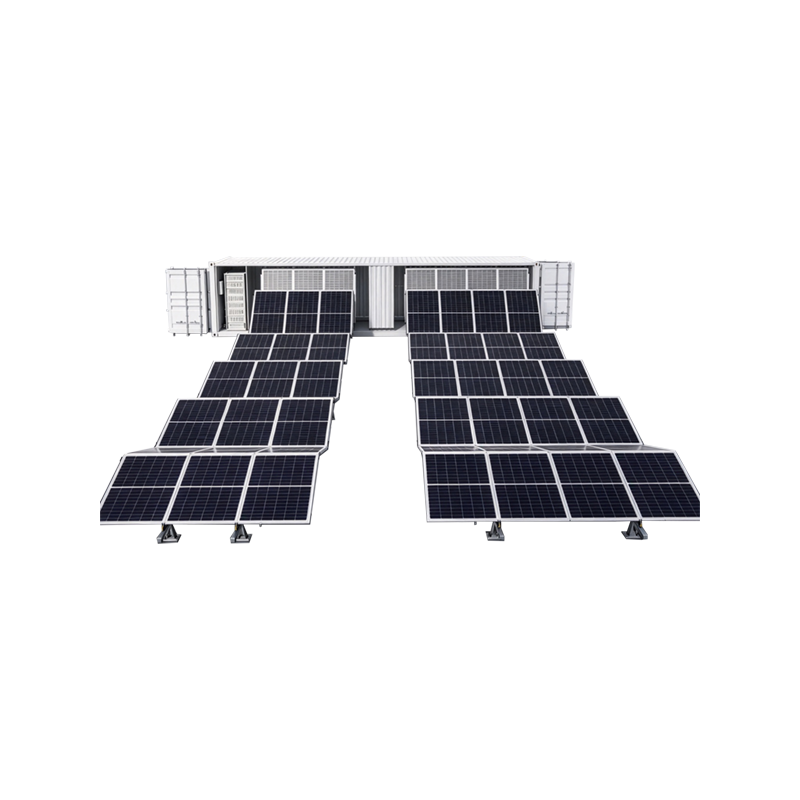
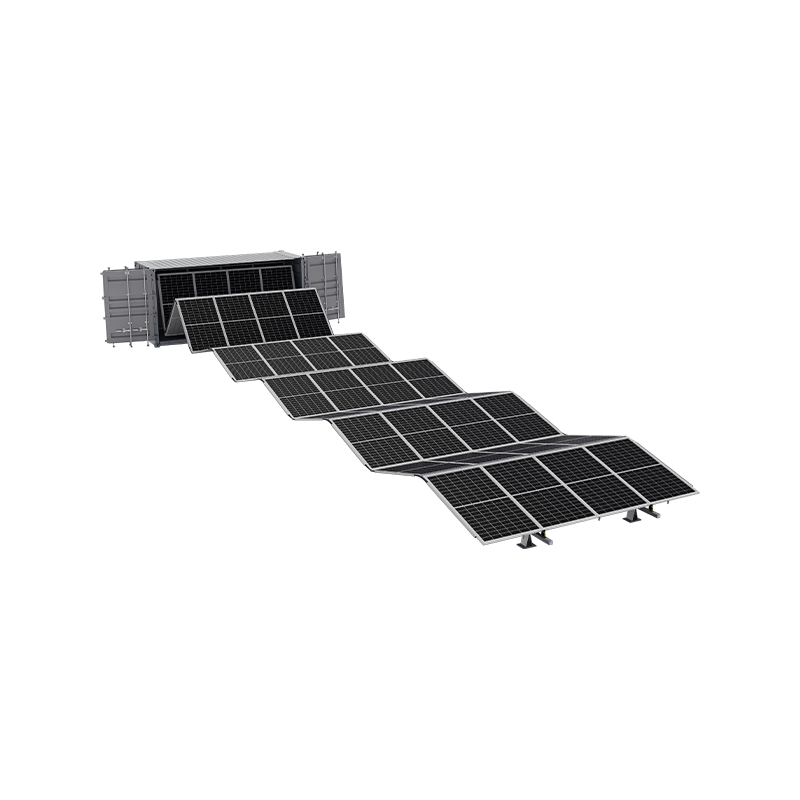 Integrated Containerized Solar Power SystemsA category of containerized solar generation systems combining PV, storage, and power conversion in transportable enclosures, with configurations suited to factory assembly and outdoor deployment.View Product →
The container format earns its place when the project needs repeatable factory assembly, outdoor installation, and a defined lifting and transport envelope. It is less suitable when the site has severe access limits, when the battery chemistry is still being selected, or when the design brief is only "we need backup power" without a 24-hour load curve.
Why an Integrated Containerized Solar Power Generation System changes the brief
With a battery-only ESS container, the procurement question is mainly about storage capacity, power rating, and grid interface. With an Integrated Containerized Solar Power Generation System, the boundary moves. You must confirm whether PV modules travel with the container, whether they are mounted on top or shipped separately, how DC cables enter the enclosure, and who owns the array structure. Those details affect transport weight, crane time, and commissioning sequence.
The solar side also changes the economics. A container that looks oversized on battery capacity may be correctly sized once you account for cloudy days, module soiling, and the load that runs overnight. Conversely, a small battery with a large PV array can waste yield if the inverter, charge controller, or load-following logic cannot absorb it. Ask for a single-line diagram and an interface matrix before comparing prices.
Sizing an ESS container around load, solar yield, and diesel backup
Size the battery for the night and for the longest expected cloudy period; size the PV for daily energy; use the generator for resilience, not as a substitute for a weak solar design. The table below compares common configurations without pretending that one format fits every site.
| Configuration | Typical use | Main trade-off |
|---|---|---|
| PV plus BESS, no diesel | Low-fuel sites with predictable daily loads and good solar resource | No firm backup during extended bad weather; battery autonomy drives cost |
| PV-BESS-DG all-in-one | Remote critical loads, construction camps, emergency response | Fuel logistics, exhaust routing, generator maintenance, and control complexity |
| Portable and scalable PV-ESS | Phased projects, rental fleets, changing site loads | Connector strategy, future capacity, and transport handling must be defined early |
| BESS only, grid or existing PV charged | Peak shaving, grid support, retrofits | Does not create solar independence unless the PV interface is added |
Portable and scalable PV-ESS containers: when flexibility matters
A portable and scalable PV-ESS container is useful when the load is expected to grow or when the unit will move between sites. The design question is not whether the container can be expanded, but where the expansion stops: busbar rating, breaker space, inverter headroom, cable entry, and the physical space left for additional racks. A practical specification leaves one spare feeder and a documented expansion limit rather than an open-ended promise.
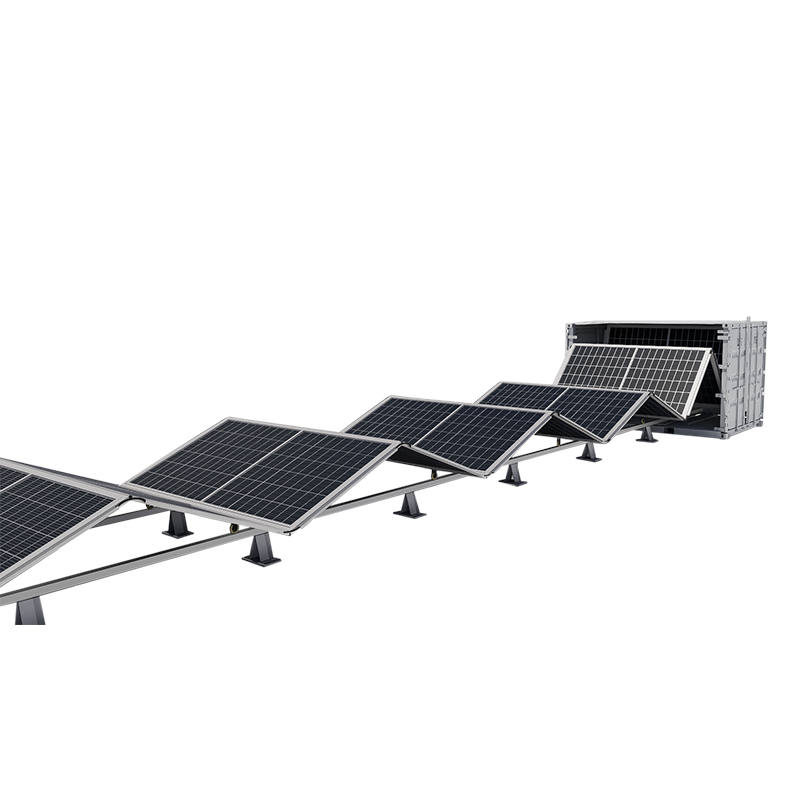
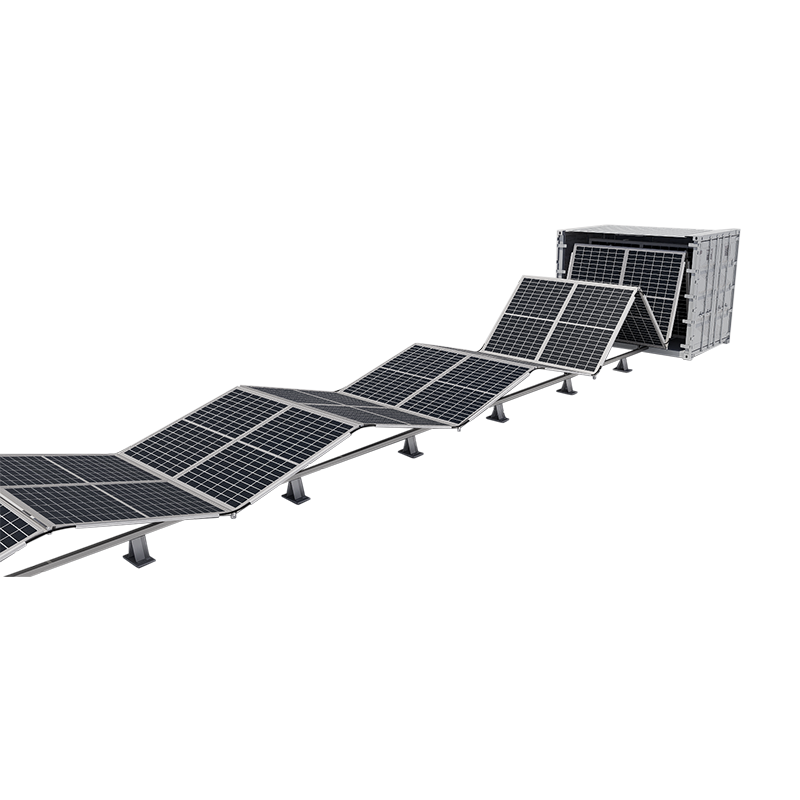
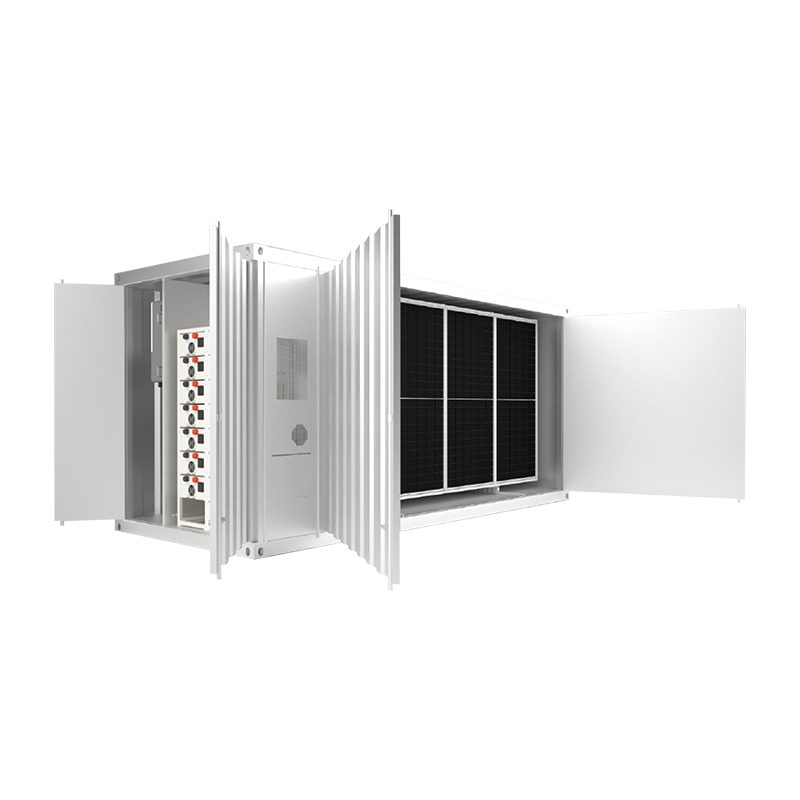 Portable and Scalable PV & ESS ContainerA pre-engineered 20HQ microgrid with 110 kWp foldable PV and 241 kWh storage, suited to movable or expanding loads with planned transport and expansion limits.View Product →
For rental or emergency fleets, also confirm lifting points, forklift access, road transport height, and whether the battery modules can be isolated without removing the entire rack. Those details decide how quickly the unit returns to service after a site move.
PV-BESS-DG all-in-one containers: where diesel stays in the design
Diesel does not disappear because solar and batteries are present. In a PV-BESS-DG all-in-one container, the generator may be the prime source during long cloudy periods or a backup source for surge loads. The control system must prevent reverse power into the generator, coordinate battery charging, and decide when the generator starts. Those settings belong in the commissioning plan, not in a last-minute site adjustment.
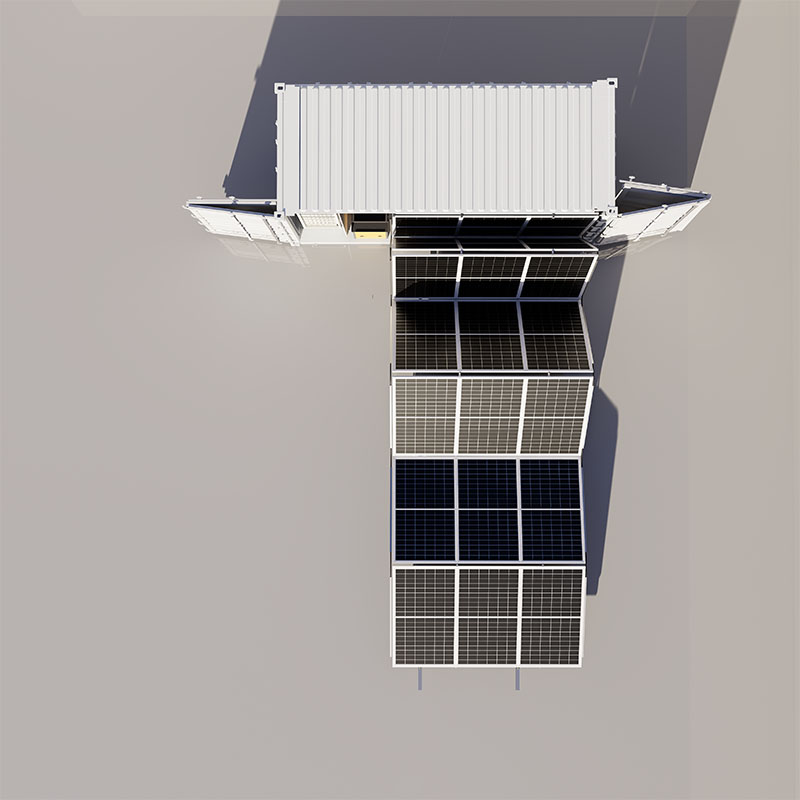 Integrated PV-BESS-DG Container SystemA factory-integrated 20HQ system combining 78 kWp PV, 128 kWh batteries, and a 75 kVA diesel generator with EMS coordination for continuous hybrid power.View Product →
Layout matters as much as controls. Exhaust must not recirculate into the PV inverter intake. Fuel tanks need bunding and service access. The generator room needs fire separation, noise control, and enough clearance for maintenance. If the container is going to a hot, dusty, or coastal site, confirm filter schedules, corrosion protection, and derating assumptions before the factory acceptance test.
Site checks before you approve the layout
- Transport route: verify container dimensions, loaded weight, crane reach, and turning radius at the final approach.
- Foundation and drainage: confirm level tolerance, anchor details, and a surface that will not pond water around the base.
- Thermal clearance: check inlet and outlet positions, prevailing wind, shading, and ambient design temperature used for derating.
- PV interface: confirm string voltage window, DC isolator access, cable route, earthing, and lightning protection.
- Fire and emergency: agree detector type, suppression scope, signage, egress, and fire service access.
- Service access: leave room for filter changes, module cleaning, torque checks, and battery module replacement.
These checks are cheaper than a return visit. A container that fits on paper but cannot be serviced safely will become a permanent constraint on site.
Delivery, commissioning, and handover risks
Require a factory acceptance test that covers the complete power path, not only the battery racks. The test should record protection settings, control logic, communication points, alarm response, and thermal performance at representative load. On site, the site acceptance test should prove the transition between solar, battery, and generator, including a deliberate loss of PV and a controlled generator start. The handover pack should include as-built drawings, the single-line diagram, firmware versions, spare-parts list, and training records.
Mobile containerized PV deployment trends point in the same direction: buyers are asking for factory-integrated systems because site labor is expensive and hard to guarantee. The useful comparison is not the highest capacity on the brochure. It is the unit with the clearest interface list, the most honest derating data, and a service plan that matches the site.
A practical selection sequence
- Build a 24-hour and seven-day load profile with peak, surge, and critical loads separated.
- Obtain solar yield estimates for the worst month, not only the annual average.
- Set the autonomy hours and define whether the generator is prime or backup.
- Confirm the container scope: PV modules, mounting, DC cabling, transformer, and control interface.
- Review thermal, fire, transport, and service access before approving the layout.
- Make factory and site acceptance tests contractual, with a spare-parts list and training included.
An ESS container works best when it is specified as a system, not a box. For a mobile solar project, the Integrated Containerized Solar Power Generation System should be judged on load match, PV yield, generator logic, and service access. Get those four right, and the container becomes a repeatable asset. Get them wrong, and the battery capacity on the label will not save the site.
You May Also Like
Copyright © Ampora Technology Co., Ltd. All Rights Reserved.
Mobile Solar Container Manufacturers Solar Power Container Solution